
Published: · Updated:
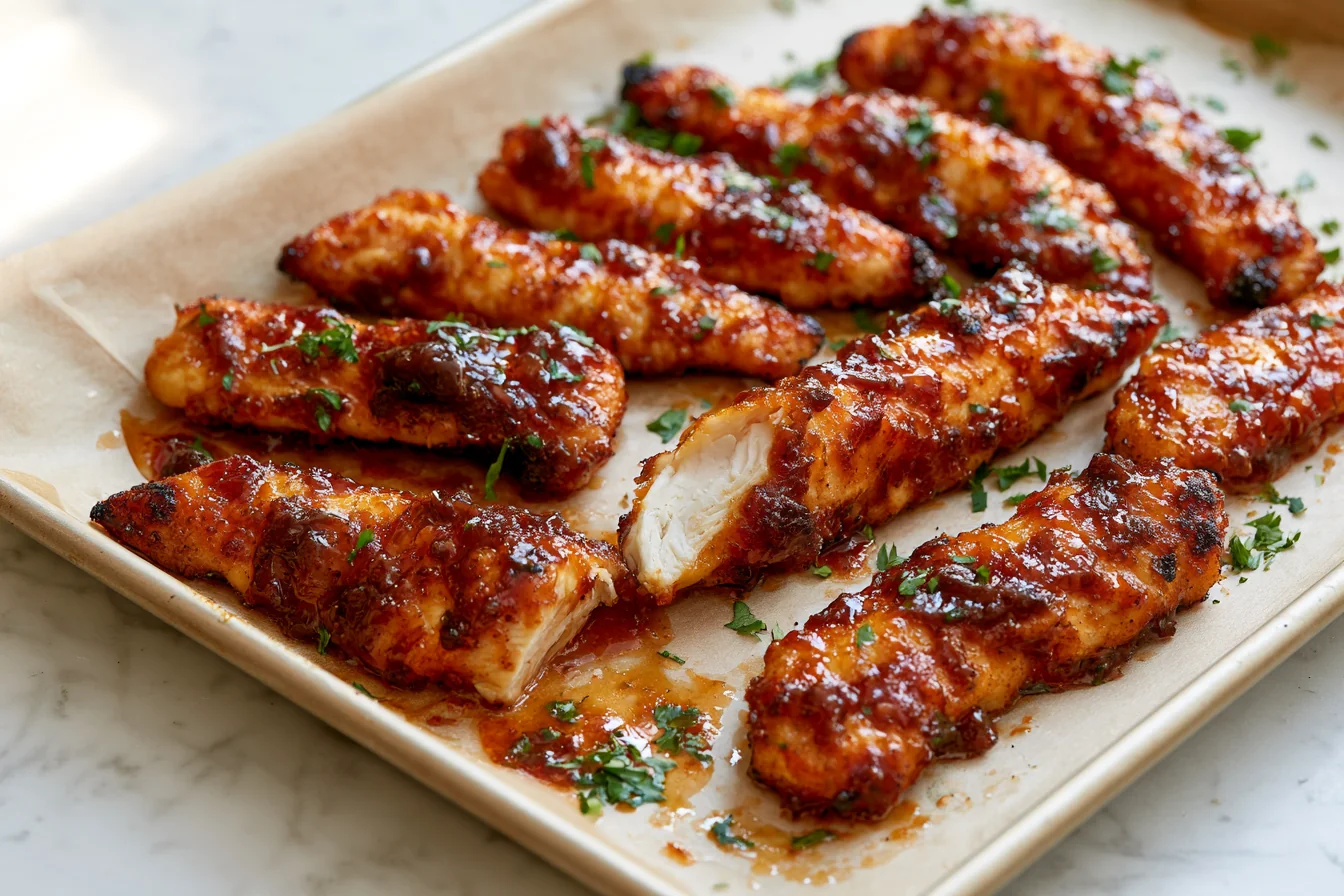
Brown sugar chicken tenders are a dry rub job: sugar, smoked paprika and a few pantry spices pressed onto chicken strips, baked hot until the coating turns sticky and dark at the edges. Twenty-five minutes door to table, four servings, and nothing to marinate the night before.
Sugar Burns Before Chicken Cooks
That sentence is the whole recipe. Brown sugar starts to darken and turn bitter around 320°F. Chicken has to reach 165°F inside. Those two numbers are not in conflict for a thick breast, which spends long enough in the oven for the surface to pass through caramelised and come out the other side as charcoal — but tenders are thin, and that changes the arithmetic in your favour.
A tender is roughly three quarters of an inch at its thickest. At 400°F it is cooked through in about fifteen minutes, which is roughly how long the sugar needs to melt, bubble and set into a glaze. Thin meat is the reason this works at all.
Everything below is built on keeping those two clocks in step.
What Goes Into the Rub
- 1 lb (450 g) chicken tenders, about 8 strips, patted dry
- ¼ cup (50 g) light brown sugar, packed
- 1 teaspoon smoked paprika
- ½ teaspoon garlic powder
- ½ teaspoon onion powder
- ½ teaspoon fine salt
- ¼ teaspoon black pepper
- 2 tablespoons unsalted butter, melted
| Ingredient | What it does | Swap |
|---|---|---|
| Light brown sugar | Melts into the glaze and browns. A quarter cup coats a pound of tenders without pooling into syrup on the pan. | Dark brown sugar for a deeper, more molasses-heavy result. It also burns slightly faster. |
| Smoked paprika | Carries the colour and gives the rub something savoury to push against all that sugar. Without it the tenders taste like dessert. | Sweet paprika plus a pinch of chipotle. Plain paprika alone is flat here. |
| Melted butter | Brushed on after the rub, not before. It helps the sugar melt evenly instead of scorching in dry patches. | Olive oil. Less flavour, but it holds up marginally better to the heat. |
Chicken tenders are the strip of meat that sits under the breast, sold separately in most supermarkets. If you cannot find them, cut breasts lengthwise into strips about three quarters of an inch thick — and keep them even, because a thin strip next to a fat one guarantees one of them is wrong. The same cut works for sesame chicken tenders.
Step by Step
1. Heat the oven high
Set the oven to 400°F (200°C) and line a sheet pan with parchment or foil. Hot and fast is deliberate: a lower oven keeps the tenders in there longer and gives the sugar more time to catch.
Wait for the oven to come fully up to temperature. Sliding the pan into a half-heated oven is the single most common way this goes wrong.
2. Dry the chicken properly
Pat every tender dry with paper towels, both sides.
Damp chicken dissolves the sugar on contact and the rub slides off into a puddle. The surface should look matte, not shiny.
3. Mix and press on the rub
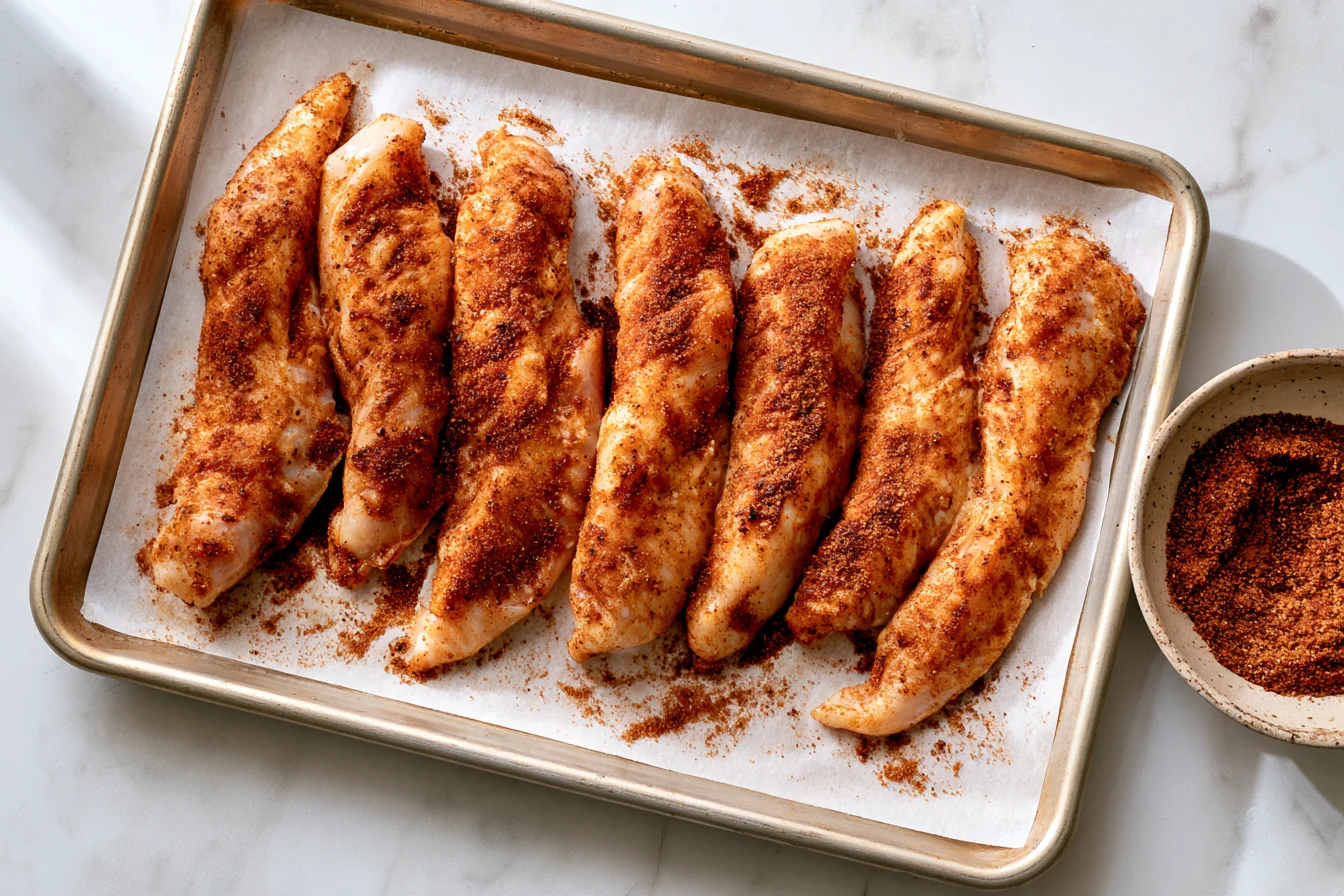
Stir the brown sugar, smoked paprika, garlic powder, onion powder, salt and pepper together, breaking up any lumps in the sugar. Press the mixture onto each tender rather than sprinkling it.
The coating should look like damp sand clinging to the meat, with no bare pink patches showing through.
4. Space them out and brush
Lay the tenders on the pan in a single row with a finger’s width between each one, then brush the tops with melted butter.
Tenders that touch steam each other and the glaze never sets. If they do not fit with gaps, use two pans.
5. Bake without flipping
Bake for 14 to 16 minutes. Leave them alone — no turning.
Flipping tears the crust off. The underside caramelises against the pan on its own.
6. Rest briefly
Move the tenders to a plate and leave them two or three minutes before serving.
The glaze is molten straight out of the oven and firms as it cools. It also stops it taking the roof of your mouth off.
Two Numbers to Check
165°F inside. Push an instant-read thermometer into the thickest part of the thickest tender, not the thin tail. Cornell Cooperative Extension, working from the USDA chart, gives 165°F as the safe minimum for poultry, and recommends a rest afterwards so the temperature holds or climbs. Cut meat is not a reliable test: the sugar glaze stains the juices dark, so “juices run clear” tells you nothing here.
Dark, not black. The coating should be the colour of maple syrup with a few deeper spots at the edges where it met the pan. Matte black patches are burnt sugar and will taste of it. If the tops are darkening fast at ten minutes, the oven runs hot — drop it to 375°F and give them three or four minutes more.
Where It Usually Goes Wrong
- Too much sugar. More rub does not mean more glaze. Past about a quarter cup per pound, the excess melts off, pools, and burns on the pan while the chicken is still cooking.
- Cooking by the clock. Tenders vary from half an inch to an inch thick. Fourteen minutes is a starting point, the thermometer is the answer.
- Crowding the pan. The most common fix for pale, wet tenders is simply more space between them.
- Buttering first. Butter under the rub makes a paste that slides. It goes on top, after.
- Using a dark metal pan without parchment. Dark pans run hotter at the base and the sugar welds itself to them.
Other Directions
- Heat. A quarter teaspoon of cayenne or chipotle powder in the rub. The sugar softens it, so you can be braver than you think.
- Honey finish. A drizzle of honey over the hot tenders turns this into something closer to baked honey chicken tenders.
- Air fryer. 380°F for 10 to 12 minutes in a single layer, same thermometer check — the method used for crispy air fryer chicken tenders.
- Mustard. A teaspoon of dry mustard powder in the rub cuts the sweetness sharply.
- Thighs instead. Boneless thighs cut into strips work, need about four minutes longer, and stay juicier.
Leftovers
Refrigerate within two hours in an airtight container; the USDA allows three to four days for cooked poultry. Reheat in a 350°F oven for about eight minutes rather than the microwave, which turns the glaze slack and the meat rubbery. Freezing works for up to three months, though the coating loses its stickiness and comes back more like a crust than a glaze.
They are also good cold, sliced into a salad or a wrap the next day.
What to Put Alongside
- Something sharp to cut the sweetness: a slaw with vinegar rather than mayonnaise, or quick pickles.
- A dipping sauce — ranch, honey mustard, or anything from this round-up of tender sauces.
- Plain rice or roasted potatoes, which need the glaze more than they need seasoning of their own.
FAQ
Why did my brown sugar burn?
Either too much of it, or too long in the oven. A quarter cup per pound is the ceiling, and tenders need fourteen to sixteen minutes at 400°F, not twenty-five. If your oven runs hot, drop to 375°F and watch the colour rather than the timer.
Can I marinate these ahead?
Not with this rub. Sugar and salt draw moisture out of the chicken, and after an hour you have a wet slurry instead of a coating. Mix the rub ahead if you like, but it goes on the chicken just before baking.
Do I need to flip them?
No, and you should not. The glaze sets against the parchment on the underside and comes away cleanly at the end. Turning them halfway pulls the crust off the top.
Can I use chicken breasts instead?
Yes, but cut them into strips first. A whole breast needs long enough in the oven that the sugar burns before the centre reaches 165°F — which is precisely the problem this recipe is shaped around.
Brown Sugar Chicken Tenders
Ingredients
Equipment
Method
- Heat the oven to 400F (200C) and line a sheet pan with parchment or foil. Let it come fully up to temperature.
- Pat the chicken tenders dry on both sides with paper towels.
- Stir the brown sugar, smoked paprika, garlic powder, onion powder, salt and pepper together, breaking up any lumps. Press the mixture onto each tender so no bare patches show.
- Lay the tenders on the pan in a single row with a finger width between them, then brush the tops with melted butter.
- Bake for 14 to 16 minutes without turning, until an instant-read thermometer in the thickest part reads 165F and the coating is the colour of maple syrup with darker edges.
- Move the tenders to a plate and rest 2 to 3 minutes before serving, so the glaze firms up.
Leave a Reply