
Published: · Updated:
Baked mac and cheese is really a sauce recipe that happens to have pasta in it. Get the béchamel right and everything after it is assembly: 12 oz of macaroni, four cups of warm liquid, about a pound of cheese, half an hour in a 9×13. It feeds eight, and it comes out bubbling at the edges under a panko crust.

Which Cheeses Actually Melt
Most of what goes wrong with baked mac is decided in the cheese aisle, before any cooking happens. Cheese is not one ingredient with one behaviour — some varieties turn into a smooth sauce, others tighten into strings or split into oil and curds, and a few barely melt at all.
The three in this recipe each do a different job:
- Sharp cheddar brings the flavour everyone actually wants, but it is the one most likely to break if the sauce is too hot when it goes in. It needs the roux to hold it together.
- Gruyère is the smoother melter of the two and it carries the cheddar through the bake. If you only have cheddar, the mac will still be good, but it will be grainier at the edges.
- Parmesan is doing almost no melting here. It is seasoning: salt, savour and a nutty edge. That is why half of it goes in the sauce and the rest goes on top with the breadcrumbs.
One more thing worth the two extra minutes: shred the cheese from a block. Bagged shredded cheese is coated with starch or powdered cellulose so the pieces do not clump in the packet, and that coating ends up in your sauce, where it thickens unpredictably and leaves a faint chalky texture.
Ingredients
For the cheese sauce
- 12 oz elbow macaroni, or any short ridged pasta
- 4 tbsp unsalted butter
- 4 tbsp all-purpose flour
- 3 cups whole milk, warmed
- 1 cup heavy cream, warmed
- 1 tsp Dijon mustard
- ½ tsp garlic powder
- ½ tsp onion powder
- ½ tsp paprika
- ½ tsp salt, plus more to taste
- ¼ tsp black pepper
- 3 cups sharp cheddar, shredded from a block
- 1 cup Gruyère, shredded
- ½ cup Parmesan, finely grated
For the topping
- 1 cup panko breadcrumbs
- 2 tbsp unsalted butter, melted
- ¼ cup Parmesan, finely grated
- 1 tsp dried parsley, optional
The butter and flour are equal by volume and work out to one tablespoon of each per cup of liquid, which is a deliberately loose béchamel. A thicker one would set like a pudding in the oven. If you want a sharper, tangier result, swap half the cheddar for an aged white cheddar; for something milder that children will eat without comment, use a mild yellow cheddar and skip the Dijon.
Step by Step
1. Heat the oven and boil the pasta short
Heat the oven to 375°F and butter a 9×13 dish. Boil the macaroni in well-salted water, but pull it a full minute before the box says al dente, then drain it and leave it in the colander.
The pasta should still have a firm bite in the middle. It is going to sit in hot sauce for thirty minutes and will finish cooking there.
2. Make the roux
Melt the 4 tbsp of butter in a large pot over medium heat, scatter in the flour and whisk it constantly for a minute or two.
It should smell faintly like toast and turn the colour of pale straw. If it is browning, the heat is too high.
3. Add the warm liquid a little at a time
Pour in the warmed milk and cream in four or five additions, whisking each one smooth before the next. Let it cook for three to five minutes once it is all in.
Warm liquid is the whole trick here — cold milk hitting a hot roux is what produces lumps. The sauce is ready when it coats the back of a spoon but still runs off it freely.
4. Season before the cheese goes in
Whisk in the Dijon, garlic powder, onion powder, paprika, salt and pepper.
Taste it now, while it is still just a seasoned white sauce. Once a pound of cheese is in, salt is much harder to judge.
5. Melt the cheese off the heat
Take the pot off the burner entirely. Add the cheddar, Gruyère and the ½ cup of Parmesan in three or four handfuls, stirring each one until it disappears before adding the next.
The sauce should go glossy and pour like thick cream. If it turns stringy or you can see beads of oil, it got too hot — the residual heat in the pot is all the cheese needs.
6. Combine and transfer
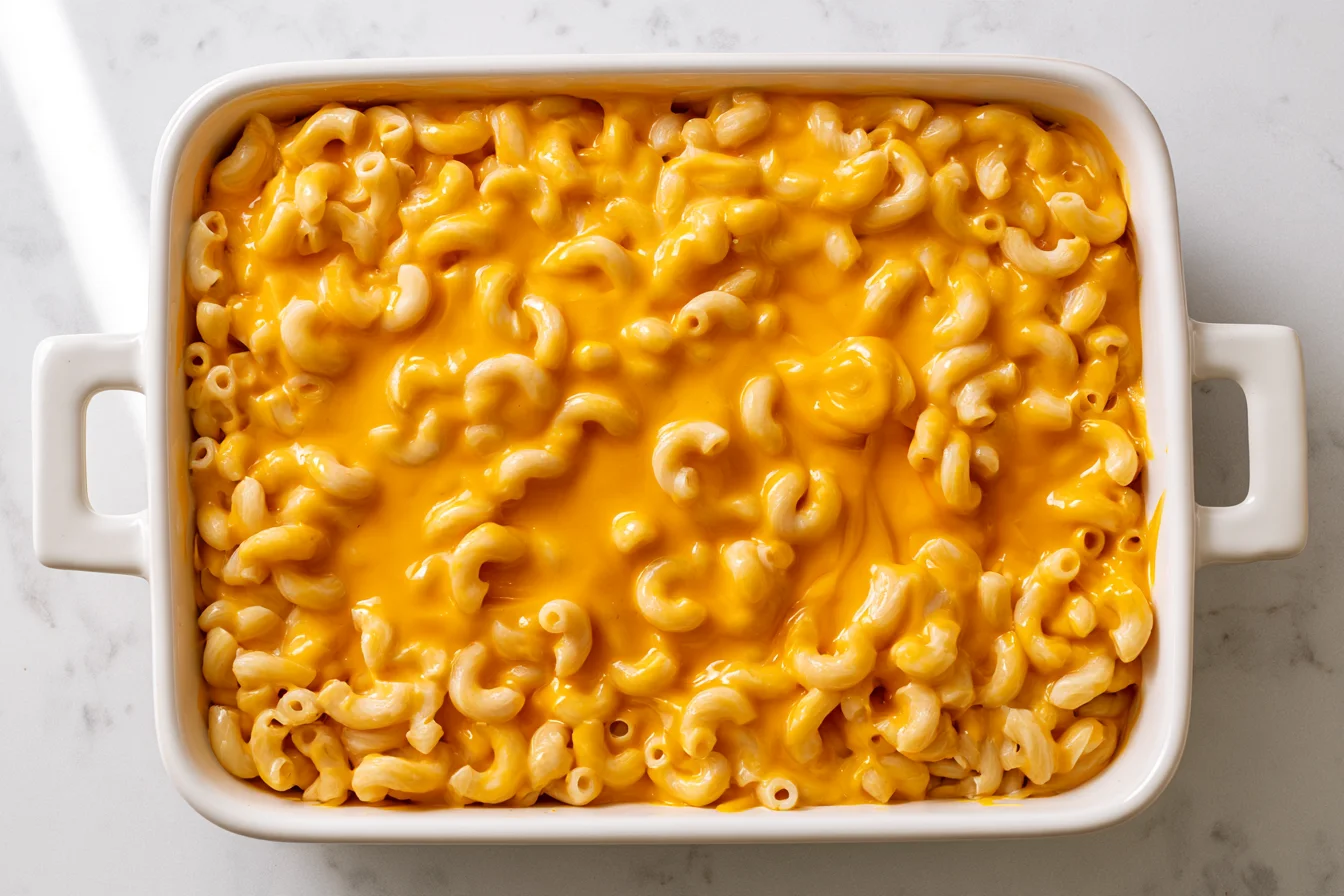
Tip the drained pasta into the sauce and fold until every piece is coated, then pour the whole thing into the buttered dish and level the top.
It will look alarmingly wet. That is correct and it is the single most common place people go wrong.
7. Top and bake
Toss the panko with the melted butter, the remaining Parmesan and the parsley, scatter it evenly over the surface, and bake uncovered for 25 to 30 minutes.
Look for the sauce bubbling up around the edges of the dish and a crust that has gone properly golden, not just dry.
8. Rest it
Let the dish stand for five minutes before you serve it.
Straight out of the oven the sauce is too fluid to hold a spoonful together. Five minutes is enough for it to set into something you can serve in squares.
The Sauce Should Look Too Thin
This is the one judgement call that separates a creamy baked mac from a dry one, and it happens in the pot, not in the oven.
When the sauce is finished it should be pourable — closer to a thin gravy than to a cheese dip. Every instinct says to keep cooking it until it looks like the finished dish, and that instinct is wrong. Pasta behaves like a sponge for the entire thirty minutes it spends in the oven, and whatever liquid is not in the sauce at that point has been absorbed by the macaroni instead. A sauce that looks correct in the pot produces mac and cheese you need a drink with.
If you have already overshot it, loosen the sauce with warm milk, a quarter cup at a time, until it moves freely again before you combine it with the pasta.
Four Ways to End Up With Dry Mac
- Cooking the pasta fully. Al dente in the pot becomes mushy in the oven. A minute short is the target.
- Adding cheese over heat. Above roughly 160°F the proteins tighten and squeeze the fat out, which is the grainy, oily texture nobody wants. Off the burner, always.
- Reducing the sauce too far. Covered in the section above, and the one most people repeat.
- Baking it too long for colour. If the crust is not browning but the time is up, run it under the broiler for ninety seconds instead of leaving it in for another ten minutes.
If You Change the Dish
The recipe is written for a 9×13, which spreads the mac in a shallow layer and gives you the most crust per serving. Other dishes work, with adjustments:
| Dish | At 375°F | What changes |
|---|---|---|
| 9×13 inch | 25–30 min | The reference. Shallow layer, maximum topping. |
| 9×9 inch, half batch | 25–30 min | Deeper layer, so check the centre is piping hot before you pull it. |
| 12-inch cast iron | Check from 20 min | The edges brown faster in metal; watch it rather than trusting the clock. |
| Individual ramekins | Check from 15 min | More crust, less sauce. Good for a dinner party, poor for leftovers. |
Add-Ins That Work
- Bacon or pancetta. Render it first and fold the pieces through with the pasta, keeping the fat for the breadcrumbs instead of the butter.
- A little heat. Half a teaspoon of cayenne in the sauce, or swap a cup of the cheddar for pepper jack.
- Chicken. Shredded rotisserie chicken turns it into a main course; the chicken Alfredo version takes that further with a cream sauce base.
- Something green. Steamed broccoli florets, folded in at the end, in roughly the proportion you would find in broccoli cheddar soup.
- Autumn version. A cup of pumpkin purée whisked into the béchamel, as in this pumpkin mac and cheese, which cuts the richness more than you would expect.
When there is no time for the oven at all, the stovetop version uses the same sauce and skips the crust.
Make It Ahead, Keep It After
Assembled and unbaked, the dish holds in the refrigerator for a day: cover it tightly, leave the breadcrumb topping off until the last minute, and add ten minutes to the bake because it is going into the oven cold. It also freezes unbaked for up to three months, topping separate, thawed overnight before it goes in.
Once it is cooked, the rules are the ordinary ones for leftovers. Texas A&M AgriLife Extension puts the numbers plainly: refrigerate within two hours of cooking, keep leftovers three to four days, and reheat to 165°F measured with a thermometer. Reheat portions in a covered dish with a splash of milk stirred through first — the sauce tightens in the cold and the milk is what brings it back.
What to Put Next to It
A pound of cheese needs something acidic beside it rather than another rich dish. A sharp salad does the most work: apple and feta with a vinaigrette cuts straight through the sauce. As a side it belongs next to something braised or roasted — a French onion meatloaf is the kind of plate it was built for.
FAQ
Why is my baked mac and cheese dry?
Almost always because the sauce was reduced too far before it met the pasta. The macaroni absorbs liquid for the whole bake, so the sauce has to leave the pot looking thinner than you want the finished dish to be. Undercooking the pasta by a minute helps too.
Should I cover baked mac and cheese with foil?
Not if you want a crust. Uncovered at 375°F for 25 to 30 minutes gives you a browned top; foil traps steam and leaves the breadcrumbs pale and soft. Cover it only if you are reheating a whole dish, where the goal is heating it through rather than browning it.
What is the best cheese for baked mac and cheese?
Sharp cheddar for flavour, with a smoother melting cheese such as Gruyère alongside it for texture, and a hard cheese like Parmesan for salt. A single cheese works but rarely does all three jobs well. Whatever you choose, shred it yourself rather than buying it pre-shredded.
Can I make baked mac and cheese ahead of time?
Yes. Assemble it completely, leave off the breadcrumbs, cover it and refrigerate for up to a day, then top it and bake with about ten extra minutes to account for the cold start. For longer than that, freeze it unbaked for up to three months and thaw it overnight in the refrigerator.
Creamy Baked Mac and Cheese
Ingredients
Equipment
Method
- Heat the oven to 375°F and butter a 9x13-inch baking dish. Boil the macaroni in well-salted water and drain it one minute before the package time for al dente.
- Melt 4 tbsp of the butter in a large pot over medium heat. Whisk in the flour and cook for 1 to 2 minutes, until it smells toasted and turns the colour of pale straw.
- Whisk in the warmed milk and cream in four or five additions, smoothing each one before adding the next. Cook for 3 to 5 minutes, until the sauce coats the back of a spoon but still runs off it freely.
- Stir in the Dijon mustard, garlic powder, onion powder, paprika, salt and pepper, then taste and adjust the salt.
- Take the pot off the heat. Add the cheddar, Gruyere and 1/2 cup Parmesan in three or four handfuls, stirring each until it has melted before adding the next.
- Fold the drained pasta into the sauce until every piece is coated, then pour it into the buttered dish and level the top. The mixture should look loose.
- Toss the panko with the melted butter, the remaining 1/4 cup Parmesan and the parsley. Scatter it evenly over the surface and bake uncovered for 25 to 30 minutes, until the sauce bubbles at the edges and the topping is golden.
- Let the dish rest for 5 minutes before serving.
Leave a Reply