A fried apple fritter is a dough ball that spends three minutes in 350°F oil. A baked one is a thick, apple-heavy quick-bread batter dropped in rough mounds onto a sheet pan and baked at 375°F for about twenty minutes, then glazed once cool. You get ten fritters, no pot of oil, and a crumb closer to a muffin than a doughnut.

Baked or Fried: What Actually Changes
This matters more than most recipes admit, because the two versions are not the same food with a different cooking method. Knowing what you trade helps you decide whether this recipe is the one you want.
| Baked | Fried | |
|---|---|---|
| Outside | Thin, dry crust that softens under the glaze | Crisp, blistered, irregular shell |
| Inside | Soft and cakey, like a dense muffin | Open and chewy, closer to a doughnut |
| Hands-on time | About 20 minutes, then the oven works alone | Constant attention at the pot |
| Best eaten | Within a day; keeps better than fried | Within an hour; goes limp fast |
If you want the crisp shell, fry them — the classic fried version is a different recipe and makes no apology for it. If you want apple fritters on a weekday morning without heating a quart of oil, keep reading.
What You Get From the Oven Version
- One bowl for the dry, one for the wet, and a sheet pan. No thermometer, no oil to strain and store.
- Two full cups of diced apple go in, so the fruit is the point rather than a garnish.
- They glaze beautifully once cool, and the glaze sets firm enough to stack them.
Ingredients
For the fritters
- 2 cups (240 g) all-purpose flour, spooned and levelled
- ½ cup (100 g) granulated sugar
- 2 teaspoons baking powder
- ½ teaspoon baking soda
- 1 teaspoon ground cinnamon
- ¼ teaspoon ground nutmeg
- ½ teaspoon fine salt
- 2 large eggs, at room temperature
- ½ cup (120 ml) whole milk
- ½ cup (120 g) sour cream, at room temperature
- 4 tablespoons (57 g) unsalted butter, melted and cooled
- 1 teaspoon vanilla extract
- 2 cups (about 260 g, roughly 2 medium apples) peeled, cored and diced into ¼-inch pieces
For the glaze
- 1½ cups (180 g) powdered sugar, sifted
- 3 tablespoons milk, added a tablespoon at a time
- ½ teaspoon vanilla extract
| Ingredient | What it does | Swap |
|---|---|---|
| Sour cream | Keeps the batter thick enough to hold a mound on the pan, and its acidity tenderises the crumb while activating the baking soda. | Full-fat plain yoghurt, same amount. Thin yoghurt makes the batter spread. |
| Diced apple | Releases steam as it bakes, which is what keeps a baked fritter from drying out. ¼-inch dice holds its shape; grated apple disappears into the crumb. | Firm pear, same dice. It is softer, so cut it slightly larger. |
| Baking soda | Reacts with the sour cream for lift and browning. Without it the fritters stay pale. | None. Extra baking powder gives lift but not the colour. |
Variety matters here. Kansas State University Research and Extension describes Granny Smith as an all-purpose apple that works in pies and sauce alike, which is why it is the default here — it is tart enough to stand up to half a cup of sugar and a sweet glaze. Honeycrisp works too and is sweeter, though the same guide lists it for snacking and sauce rather than baking. Avoid McIntosh, which collapses.
Step by Step
1. Heat the oven and prepare the pan
Set the oven to 375°F (190°C) and line two baking sheets with parchment. Two sheets, not one: these spread, and crowding them means the edges steam instead of browning.
The oven needs to be fully up to temperature before the batter goes in, or the fritters spread before they set.
2. Whisk the dry ingredients
In a large bowl, whisk the flour, sugar, baking powder, baking soda, cinnamon, nutmeg and salt until the spices are evenly distributed and no pale streaks remain.
Thirty seconds of whisking does the job. Pockets of baking soda leave bitter spots.
3. Combine the wet ingredients
In a second bowl, whisk the eggs, milk, sour cream, melted butter and vanilla until smooth. Room-temperature dairy matters: cold sour cream seizes the melted butter into flecks.
The mixture should be pourable and uniform, with no lumps of sour cream left.
4. Bring the two together, barely
Pour the wet into the dry and fold with a spatula until the last dry patches disappear. Stop there. Then fold in the diced apple.
The batter should be thick and lumpy, holding its shape on the spatula rather than running off it. A smooth batter means you have overmixed and the fritters will be tough.
5. Scoop and shape
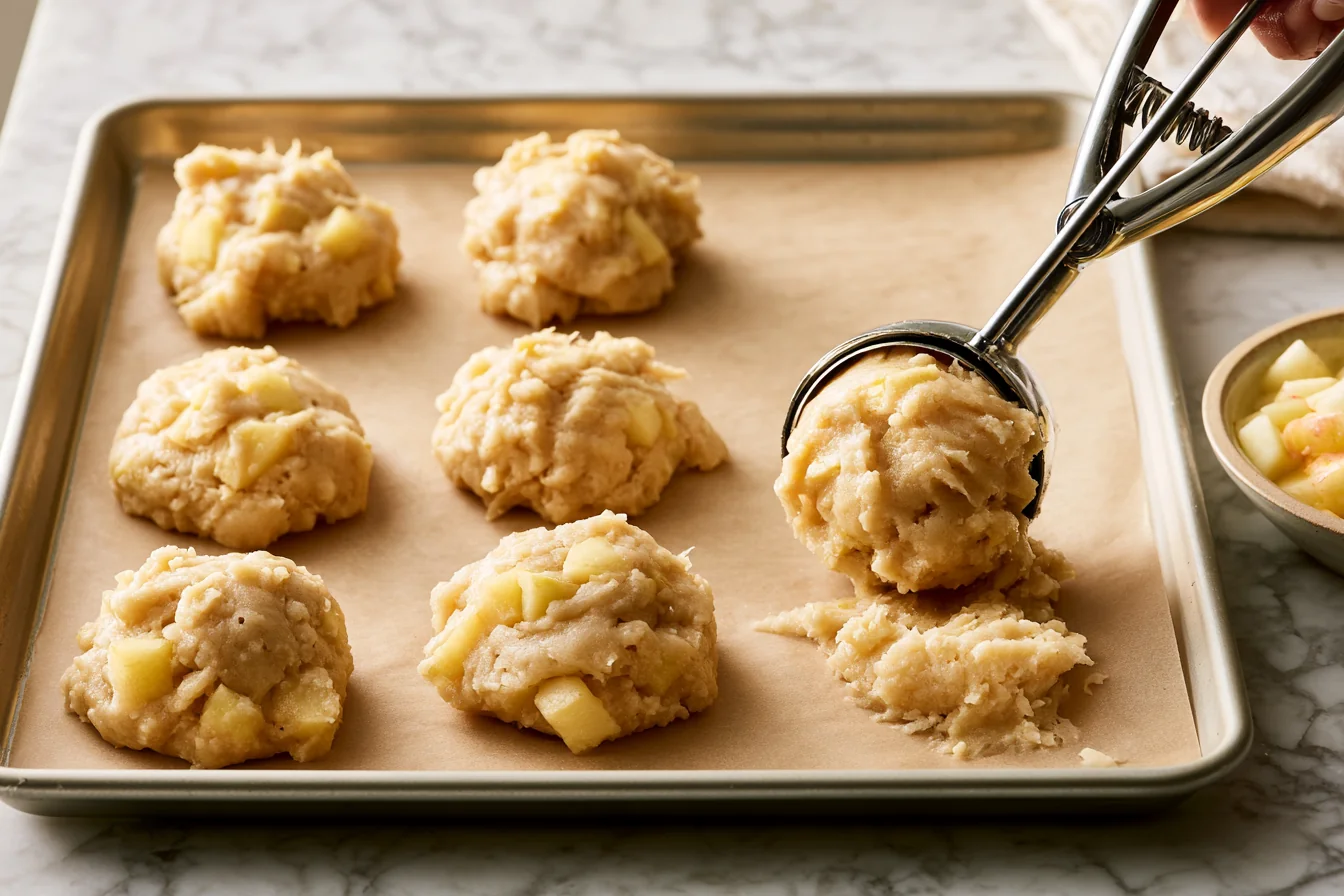
Drop scant ¼-cup mounds onto the parchment, five per sheet, leaving a good three inches between them. Pile them high and leave them rough — do not flatten or smooth them. The craggy surface is what makes a fritter look like a fritter.
Each mound should sit up on its own with visible chunks of apple poking through.
6. Bake
Bake one sheet at a time on the middle rack for 18 to 20 minutes.
They are done when the tops are deep golden, the edges have set and a toothpick pushed into the centre, away from a piece of apple, comes out with no wet batter on it.
7. Cool completely, then glaze
Move them to a wire rack and let them cool all the way through, at least 30 minutes. Whisk the powdered sugar, milk and vanilla, adding the milk a tablespoon at a time. Spoon it over each fritter and let the excess drip onto parchment underneath.
The glaze should fall from the spoon in a slow ribbon that disappears back into the bowl after a few seconds. Glazing a warm fritter makes the icing soak in and vanish.
Reading the Tops
Colour first: the tops should be an even deep golden brown, noticeably darker than the pale batter that went in. A fritter that is still blond in the middle is underbaked no matter what the timer says.
Then the toothpick, pushed into the thickest part and angled away from the apple pieces. Damp crumbs clinging to it are fine; wet batter is not. Apple is wet by nature, so testing straight through a chunk gives a false reading every time.
Finally, the edges. They should look dry and set, slightly pulled in from the parchment. If they still look glossy, give them two more minutes.
The Details That Decide It
- Dice the apple small and evenly. Large chunks stay crunchy while the batter around them overbakes. A ¼-inch dice cooks in the same twenty minutes as the crumb.
- Pat the apple dry. Juicy varieties shed liquid into the batter and thin it. A quick blot with a paper towel after dicing keeps the mounds standing.
- Weigh the flour if you can. Two cups scooped straight from the bag can be 40 g heavier than two cups spooned and levelled, and that is the difference between a tender fritter and a dry one.
- Chill the batter 10 minutes if your kitchen is warm. Firmer batter spreads less and bakes taller.
- Glaze over a rack set on parchment. You can scrape up and reuse what drips, and nothing sticks to the pan.
Changing It Up
- Apple cider glaze. Replace the milk with boiled-down apple cider for a sharper, more apple-forward finish that also sets a touch firmer.
- Brown butter. Cook the butter until it smells nutty and the solids turn amber before adding it. It costs five minutes and changes the whole fritter.
- Air fryer. The same batter works in smaller mounds at a lower temperature — see the air fryer method for timings.
- Loaf instead of fritters. Pour the batter into a lined loaf tin and you are most of the way to spiced apple fritter bread.
- Cinnamon sugar. Skip the glaze and toss the warm fritters in cinnamon sugar instead, which keeps them crisper at the edges.
Storing and Reheating
| Where | How long | Notes |
|---|---|---|
| Room temperature | Up to 2 days | Airtight, in a single layer. The glaze softens the crust after the first day. |
| Refrigerator | Up to 5 days | Airtight. The crumb firms up; 10 seconds in the microwave brings it back. |
| Freezer | Up to 3 months | Freeze unglazed on the tray, then bag. Reheat from frozen at 350°F for 8 minutes and glaze after cooling. |
The batter does not keep — the baking soda starts working the moment it meets the sour cream, so bake it within about fifteen minutes of mixing. If you want to get ahead, dice and refrigerate the apples the night before.
What Goes With Them
- Strong black coffee. These are sweet, and milky coffee compounds it.
- Alongside apple fritter bread on a brunch table, so people can take a slice or a whole fritter.
- A spoonful of plain Greek yoghurt on the side, which cuts the glaze the way crème fraîche cuts a tarte.
- Warm, split and topped with a scoop of vanilla ice cream, as a dessert rather than a breakfast.
FAQ
Why did my baked apple fritters spread flat?
Either the batter was too thin or the oven was not fully preheated. Thin batter usually comes from wet apples or from low-fat sour cream. Blot the diced apple, use full-fat dairy, and if the mounds still slump, chill the batter for ten minutes before scooping.
Can I make these without sour cream?
Full-fat plain yoghurt is the direct substitute, in the same quantity. Milk alone is not — the batter loses the thickness that lets it hold a mound, and the baking soda loses the acid it reacts with.
Do baked apple fritters taste like fried ones?
No, and it is worth setting expectations. The flavour is very close, but the texture is a soft cakey crumb rather than a crisp chewy shell. Think of them as apple fritter muffins in a fritter’s shape.
Why is my glaze soaking in instead of sitting on top?
The fritters were still warm. Residual heat melts the icing and pulls it into the crumb. Let them cool completely on a rack, at least 30 minutes, before glazing.
Can I use a muffin tin?
Yes, and they bake more evenly that way, though you lose the craggy edges. Fill greased wells about three-quarters full and bake for the same 18 to 20 minutes.
Baked Apple Fritters
Ingredients
Equipment
Method
- Heat the oven to 375F (190C) and line two baking sheets with parchment paper.
- In a large bowl, whisk the flour, sugar, baking powder, baking soda, cinnamon, nutmeg and salt until evenly combined.
- In a second bowl, whisk the eggs, milk, sour cream, melted butter and vanilla until smooth.
- Pour the wet mixture into the dry and fold with a spatula only until the last dry patches disappear. Fold in the diced apple. The batter should be thick and lumpy.
- Drop scant 1/4-cup mounds onto the parchment, five per sheet, leaving about 3 inches between them. Pile them high and leave the surface rough.
- Bake one sheet at a time on the middle rack for 18 to 20 minutes, until the tops are deep golden and a toothpick pushed into the centre, away from a piece of apple, comes out with no wet batter.
- Move the fritters to a wire rack and cool completely, at least 30 minutes.
- Whisk the powdered sugar, milk and vanilla, adding the milk a tablespoon at a time until the glaze falls from the spoon in a slow ribbon. Spoon it over the cooled fritters and let the excess drip onto parchment.
Notes

Leave a Reply