Published: · Updated:
Steak and shrimp teriyaki noodles bring both proteins into one skillet with noodles, crisp vegetables and a glossy homemade sauce. Total time is about 35 minutes. The beef stays tender, the shrimp stays plump, the vegetables keep their snap, and the sauce thickens into a glaze that coats every strand. It serves four as a main dish.

Why You’ll Love It
- One skillet cooks the steak, the shrimp, the vegetables and the sauce, so there is a single pan to wash.
- The sauce is pantry soy sauce, sugar, vinegar and oil plus fresh garlic and ginger, and it turns glossy in under three minutes.
- Steak and shrimp each need only a few minutes over high heat, which is what keeps the whole dish inside 35 minutes.
Ingredients
Teriyaki Sauce
- 1/2 cup low-sodium soy sauce, or tamari for a gluten-free sauce
- 1/4 cup water
- 1/4 cup packed brown sugar
- 1 tablespoon honey, or maple syrup
- 1 tablespoon rice vinegar
- 1 teaspoon toasted sesame oil
- 1 clove garlic, minced
- 1 teaspoon grated fresh ginger
- 1 tablespoon cornstarch, whisked with 2 tablespoons cold water
Steak, Shrimp and Noodles
- 8 ounces lo mein noodles, about 225 g, or spaghetti
- 8 ounces flank or sirloin steak, cut into 1-inch cubes, or thinly sliced against the grain
- 8 ounces large shrimp, peeled and deveined
- 1 cup broccoli florets, cut small
- 1 red bell pepper, thinly sliced
- 1/2 cup sugar snap peas, trimmed
- 2 tablespoons vegetable oil, divided
- 2 green onions, thinly sliced, for garnish
- 1 teaspoon sesame seeds, for garnish
Flank and sirloin both stay tender in a fast, hot pan, which is why they suit this dish better than a thick roasting cut. One-inch cubes give you juicy steak bites, the way easy garlic butter steak bites are cut; thin slices against the grain give more surface for the sauce to cling to. Both work, they simply cook for different lengths of time.
| Ingredient | What it does | Swap |
|---|---|---|
| Cornstarch | Turns the thin sauce into a glaze that clings to the noodles | Equal arrowroot |
| Brown sugar | Balances the salt and helps the sauce gloss | Honey or maple syrup |
| Rice vinegar | Cuts the sweetness so the sauce does not taste flat | Mild cider vinegar |
Step by Step
1. Whisk the sauce
Whisk the soy sauce, water, brown sugar, honey, rice vinegar, sesame oil, garlic and ginger in a bowl. In a second bowl, whisk the cornstarch with the cold water until smooth, then stir it into the sauce.
The slurry should pour off the whisk with no white specks left in the bowl.
2. Boil the noodles
Cook the noodles in boiling salted water about one minute short of the package time. Drain, rinse briefly under cold water and set aside.
A strand should bend without snapping and still feel firm in the middle, because it finishes cooking in the sauce.
3. Sear the steak
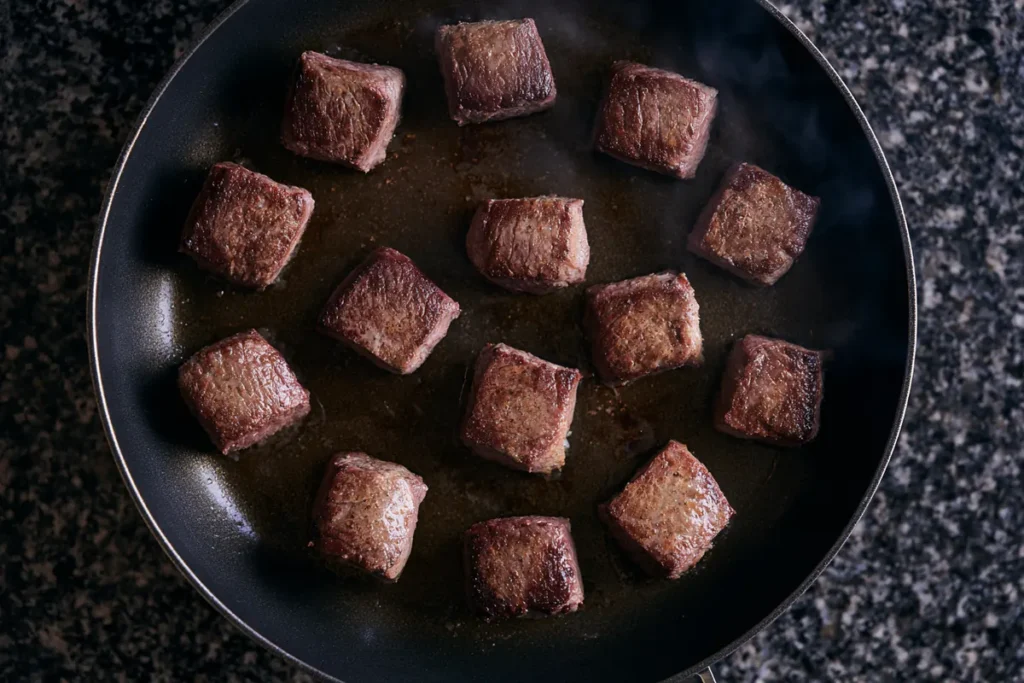
Heat 1 tablespoon of the oil in a large skillet or wok over medium-high heat. Add the cubes in a single layer and leave them alone for 2 minutes, then turn and sear 2 minutes on a second face, and a third if they still look pale — 5 to 6 minutes in all. Thin slices need only 1 to 2 minutes per side. Move the steak to a plate and let it rest 3 minutes.
Each cube should have a deep brown crust on at least two faces and still give when pressed at the centre.
4. Cook the shrimp
Add the shrimp to the same skillet in one layer and cook 1 to 2 minutes per side. Move them to the plate with the steak.
Each shrimp should curl into a loose C and turn from grey to pearly white.
5. Stir-fry the vegetables
Add the remaining tablespoon of oil, then the broccoli, bell pepper and snap peas. Stir-fry 4 to 5 minutes.
The broccoli should be bright green and squeak against the spoon rather than flop.
6. Toss everything with the sauce
Return the steak and shrimp to the skillet with the noodles, pour in the sauce and toss for 2 to 3 minutes.
The sauce should go from watery to glossy and leave a clear trail when you drag the spoon across the pan.
How to Know It’s Done
Beef steaks are safe at an internal temperature of 145F, or 63C, followed by a 3-minute rest, and fish and shellfish are safe at the same 145F, according to the FoodSafety.gov minimum internal temperature chart. Thin stir-fry slices pass that mark quickly, so check the thickest piece with an instant-read thermometer rather than the timer.
Visually: the steak is browned outside and still pink at the centre of the largest piece, the shrimp is opaque and pearly all the way through with no translucent streak along the back, and the sauce coats the noodles instead of pooling at the bottom of the pan.
Mistakes to Avoid
- Crowding the pan. Steak piled in a heap steams instead of searing. Cook it in two batches if the skillet is small.
- Adding the cornstarch dry. Stirred straight into warm sauce it clumps. Always whisk it with cold water first.
- Cooking the noodles fully. They absorb sauce in the skillet, so a fully cooked noodle turns soft.
- Leaving the shrimp in too long. A tight, curled O instead of a loose C means it has gone rubbery.
- Using regular soy sauce without adjusting. Half a cup of full-salt soy sauce makes the glaze harsh; cut it with extra water if that is all you have.
Two Ways to Serve It
Loaded with vegetables
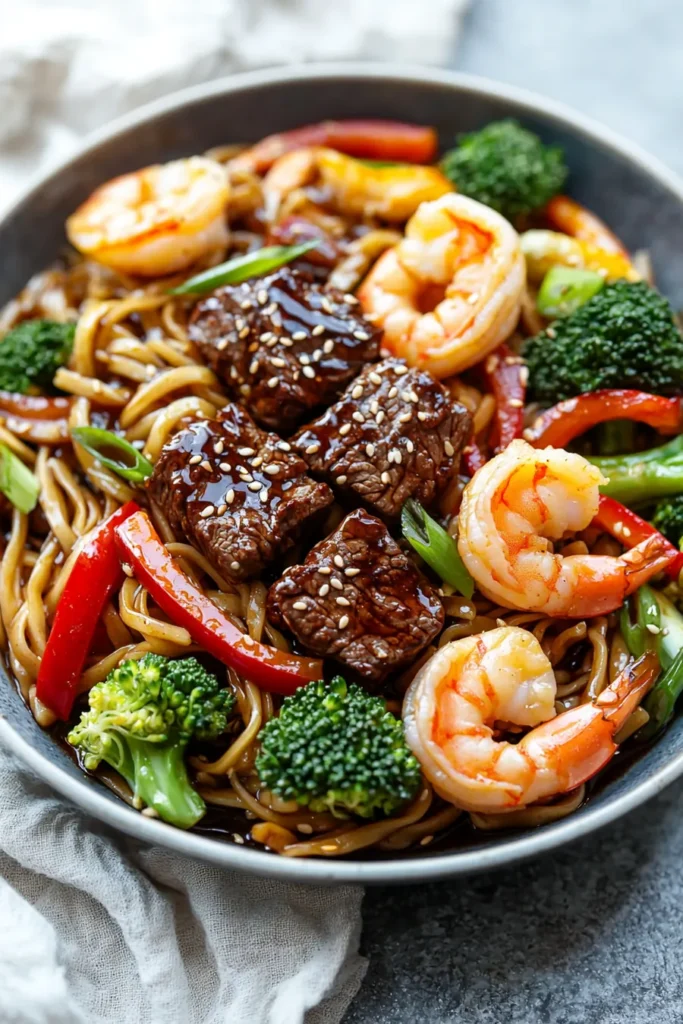
This is the recipe as written. Broccoli, red bell pepper and sugar snap peas add colour and bulk, they keep the plate from tasting only of sweet glaze, and they stretch the dish to four generous servings. Total time 35 minutes.
Just steak, shrimp and noodles
Skip the vegetable step entirely and the dish is ready in about 30 minutes. The sauce then coats noodles and protein alone, so every strand tastes stronger. Use 10 ounces of noodles instead of 8 to keep four servings, or leave it at 8 and serve three.
Both versions use the same sauce, the same cooking order and the same doneness checks. Only the vegetable step changes.
Variations
- Swap both proteins for chicken and you have chicken teriyaki noodles, cooked the same way in the same pan.
- Drop the meat and seafood altogether and lean on mushrooms and extra vegetables, the way one pot vegetarian teriyaki noodles does.
- Serve the shrimp over rice instead of noodles for teriyaki shrimp rice bowls.
- Add heat with a pinch of red pepper flakes or a spoon of chilli garlic sauce stirred into the teriyaki.
- Change the vegetables with the season: bok choy, carrots, baby corn and mushrooms all hold up to the same 4 to 5 minute stir-fry.
- Cut the steak either way: one-inch cubes stay juicier and eat like steak bites, thin slices against the grain cook faster and pick up more sauce.
Storage and Make-Ahead
| Where | How long | How |
|---|---|---|
| Fridge | 3 days | Airtight container; USDA allows 3 to 4 days for cooked leftovers |
| Freezer | Not advised | Noodles soften and shrimp turns rubbery on thawing |
| Reheat | 4 to 5 minutes | Skillet over medium heat with a splash of water |
The sauce can be whisked up to 5 days ahead and kept in a jar in the fridge; shake or whisk it again before it goes in the pan, because the cornstarch settles. The steak and vegetables can be sliced a day ahead and kept covered, which cuts the prep to a few minutes on the night.
What to Serve With It
- A cold, sharp salad resets the palate against the sweet glaze, and spicy Asian cucumber salad takes five minutes.
- Teriyaki glazed Brussels sprouts echo the sauce without adding another protein.
- Steamed edamame with flaky salt, for something to pick at while the noodles finish.
- Plain jasmine rice, if you are stretching the dish to feed five or six.
FAQ
Can I use store-bought teriyaki sauce?
Yes. Use about 3/4 cup of bottled sauce in place of the homemade mix. Most bottled versions are already thickened, so skip the cornstarch slurry and simmer the sauce for a minute less.
What noodles work best?
Lo mein is the closest match, but spaghetti, udon and rice noodles all work. Choose a noodle thick enough to hold the sauce; very thin vermicelli turns mushy once it is tossed in the skillet.
Can I make it with only steak or only shrimp?
Yes. Use one pound of a single protein instead of half a pound of each and keep the cooking times the same. The sauce quantity does not change.
Why is my sauce not thickening?
Cornstarch needs to reach a simmer to set. If the pan has cooled from the noodles and vegetables going in, raise the heat until the sauce bubbles at the edges, then toss for another minute.
Steak and Shrimp Teriyaki Noodles
Ingredients
Equipment
Method
- Whisk the soy sauce, water, brown sugar, honey, rice vinegar, sesame oil, garlic and ginger in a bowl. In a second bowl, whisk the cornstarch with 2 tbsp cold water until no lumps remain, then stir it into the sauce.
- Cook the noodles in boiling salted water until just short of tender, about 1 minute less than the package time. Drain, rinse briefly with cold water and set aside.
- Heat 1 tbsp of the oil in a large skillet or wok over medium-high heat. Add the steak cubes in a single layer and leave them alone for 2 minutes, then turn and sear 2 minutes on a second face, and a third if they still look pale, 5 to 6 minutes in all. Thin slices need only 1 to 2 minutes per side. Cook until browned outside and 145F (63C) at the centre of the largest piece, then transfer to a plate and rest 3 minutes.
- Add the shrimp to the same skillet in one layer and cook 1 to 2 minutes per side, until pearly white and opaque throughout, or 145F (63C). Transfer to the plate with the steak.
- Add the remaining 1 tbsp oil, then the broccoli, bell pepper and snap peas. Stir-fry 4 to 5 minutes, until the broccoli is bright green and tender-crisp.
- Return the steak and shrimp to the skillet with the noodles. Pour in the sauce and toss for 2 to 3 minutes, until it thickens and coats everything. Garnish with green onions and sesame seeds and serve at once.
Notes
Leave a Reply