
Published: · Updated:
Honey mustard baked salmon is a weeknight fish dinner: four fillets brushed with a honey, Dijon and garlic glaze, then baked at 400°F for 12 to 15 minutes. It takes about 25 minutes from start to table, serves four, and suits anyone who wants salmon with a sweet, tangy crust and no stovetop work.
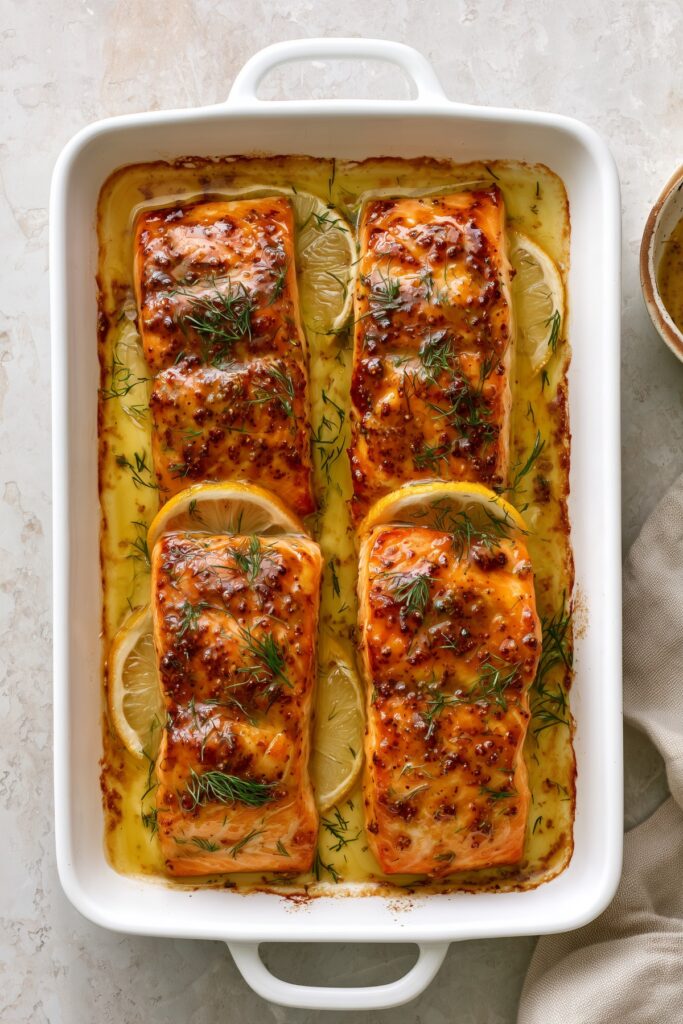
Glaze Twice, Not Once
Most versions pour all the sauce over the fish before it goes in the oven. Some of it slides off. The rest thins out in the heat and pools in the dish.
Split the glaze instead. Brush half on the raw fillets. Keep the other half aside and spoon it on for the last few minutes of baking.
The first coat seasons the fish. The second coat turns sticky and shiny. You get a real glaze on top, not a watery sauce underneath.
What You Need
For the salmon
- 4 salmon fillets, about 6 oz each and 1 inch thick, skin on or off
- ½ teaspoon salt
- ¼ teaspoon black pepper
For the honey mustard glaze
- 3 tablespoons honey (maple syrup works too)
- 3 tablespoons Dijon mustard (or half Dijon, half whole-grain)
- 1 tablespoon olive oil
- 1 tablespoon fresh lemon juice
- 2 garlic cloves, finely minced
- Fresh dill or parsley, chopped, to finish
Try to buy fillets of the same thickness. Thin tail pieces cook faster than thick centre cuts and will dry out before the others are ready.
| Ingredient | What it does | Swap |
|---|---|---|
| Honey | Sweetness and the sticky, browned top | Maple syrup or brown sugar |
| Dijon mustard | Sharp tang that balances the honey and thickens the glaze | Whole-grain mustard for texture |
| Lemon juice | Brightens the glaze and cuts the richness of the fish | Lime juice or white wine vinegar |
Step by Step
1. Heat the oven
Heat the oven to 400°F. Line a baking dish or sheet pan with parchment, or brush it lightly with oil.
The parchment should lie flat, with no folds under where the fish will sit.
2. Dry and season the fillets
Pat the salmon dry with paper towels. Place the fillets in the dish, skin side down, with a little space between them. Season with the salt and pepper.
The surface should look matte, not wet, so the glaze can cling.
3. Mix the glaze
Whisk the honey, Dijon, olive oil, lemon juice and garlic in a small bowl. Pour half into a second bowl and set it aside.
The glaze should be smooth and pale gold, thick enough to coat the back of a spoon.
4. Brush and bake
Brush the first half of the glaze over the tops and sides of the fillets. Bake for 8 minutes.
The edges should be turning opaque while the centre still looks pink and glossy.
5. Add the second coat
Spoon the reserved glaze over the fish. Return the dish to the oven for 4 to 7 minutes more, depending on thickness.
The top should look shiny and set, with a few darker spots at the edges.
6. Rest and finish
Let the salmon rest for 2 minutes. Scatter over the dill or parsley and spoon any glaze from the dish over the top.
The flesh should flake when pressed gently with a fork.
When to Pull It Out
Salmon goes from moist to dry in a few minutes, so check early. The FDA safe minimum cooking temperature chart sets 145°F for fish, measured in the thickest part.
- An instant-read thermometer in the thickest fillet reads 145°F.
- The flesh has turned opaque all the way through.
- It separates easily when you press it with a fork.
No thermometer? Check the thickest fillet first. If the centre still looks translucent, give the dish two more minutes and test again.
What Makes the Difference
- Dry fish. Moisture on the surface makes the glaze slide off into the dish.
- Even thickness. If one fillet is much thinner, take it out early rather than overcooking the rest.
- Fresh garlic, finely minced. Large pieces stay raw-tasting in such a short bake.
- A short rest. Two minutes lets the glaze settle so it stays on the fish when you lift it.
For an even darker top, switch the oven to broil for the last minute and watch it closely. Honey burns fast.
Ways to Change It
- Maple instead of honey: the flavour is woodier and less floral, close to this baked salmon with maple glaze.
- Whole-grain mustard: replace half the Dijon for a crust with visible seeds and a milder bite.
- A little heat: add a pinch of cayenne or red pepper flakes to the glaze.
- Bite-size pieces: cut the salmon into cubes for party food, or try these crispy honey garlic salmon bites.
- No oven: the same glaze works on air fryer salmon; brush it on during the last few minutes.
What to Serve With It
The glaze is sweet, so pair it with something roasted or green. Oven-roasted Brussels sprouts can share the oven if you start them first.
For a fuller plate, add garlic herb roasted potatoes with carrots and zucchini, or a simple bowl of rice to catch the extra glaze.
Storing Leftovers
Cool the salmon, then refrigerate it in a covered container and eat it within 3 to 4 days, the window USDA gives for cooked leftovers. Leftovers are good cold, flaked over a salad, or gently warmed in a low oven.
FAQ
How long does salmon take to bake at 400°F?
Fillets about 1 inch thick usually need 12 to 15 minutes. Thinner pieces can be ready in 10. Go by the 145°F reading rather than the clock.
Should I bake salmon covered or uncovered?
Uncovered. Foil traps steam, so the glaze stays runny instead of turning sticky and golden.
Do I put the skin side up or down?
Skin side down. The skin protects the bottom of the fillet from the hot pan, and it peels away easily after baking if you do not want to eat it.
Can I use frozen salmon?
Yes. Thaw it overnight in the fridge, then pat it very dry so the glaze can cling, and follow the recipe as written.
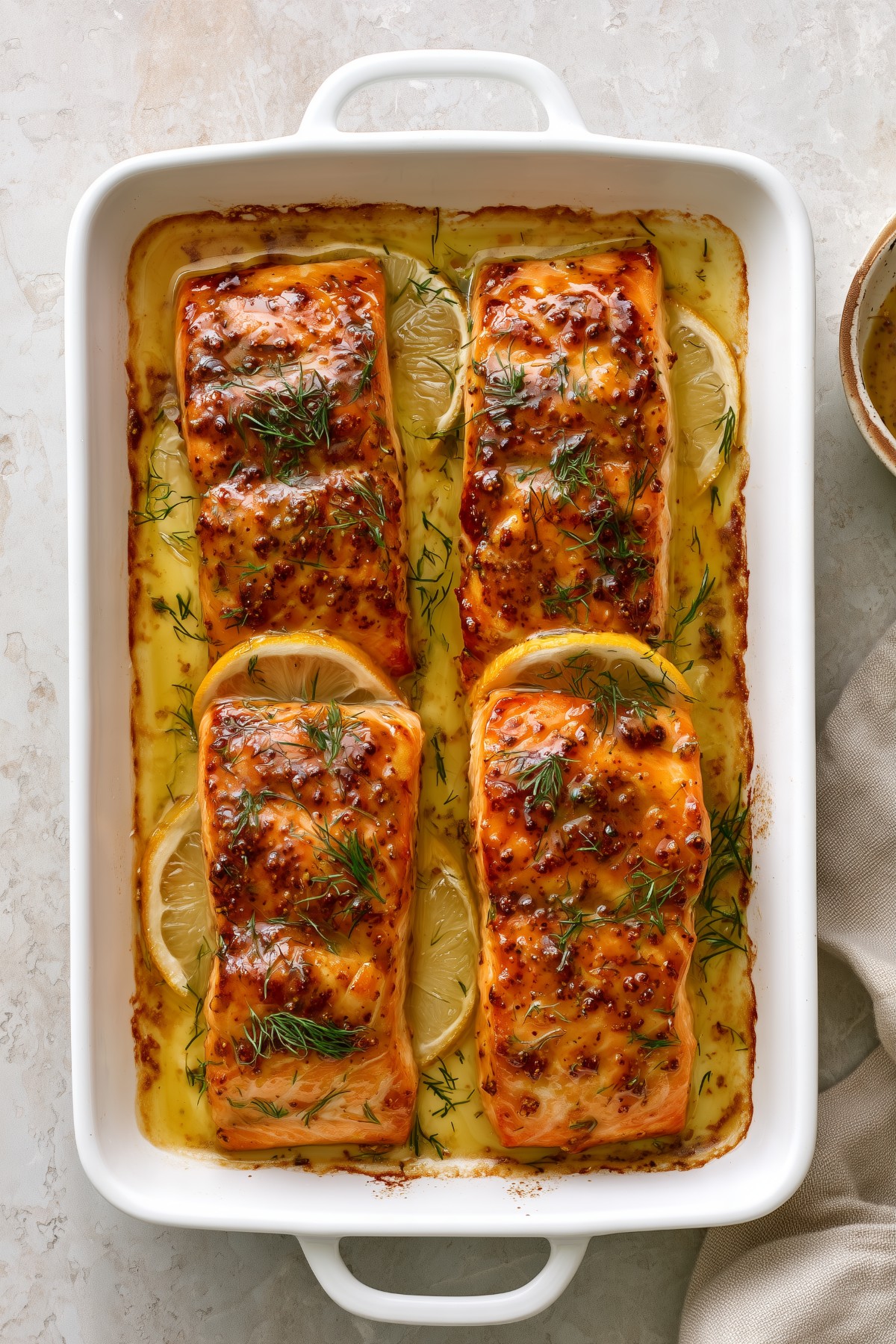
Honey Mustard Baked Salmon
Ingredients
Method
- Heat the oven to 400°F. Line a baking dish or sheet pan with parchment, or brush it lightly with oil.
- Pat the salmon dry with paper towels. Place the fillets in the dish skin side down, with a little space between them, and season with the salt and pepper.
- Whisk the honey, Dijon, olive oil, lemon juice and garlic in a small bowl. Pour half into a second bowl and set it aside.
- Brush the first half of the glaze over the tops and sides of the fillets. Bake for 8 minutes.
- Spoon the reserved glaze over the fish and bake for 4 to 7 minutes more, until the thickest fillet reads 145°F and flakes easily with a fork.
- Let the salmon rest for 2 minutes. Scatter over the dill or parsley and spoon the glaze from the dish over the top.
Leave a Reply