
Published:
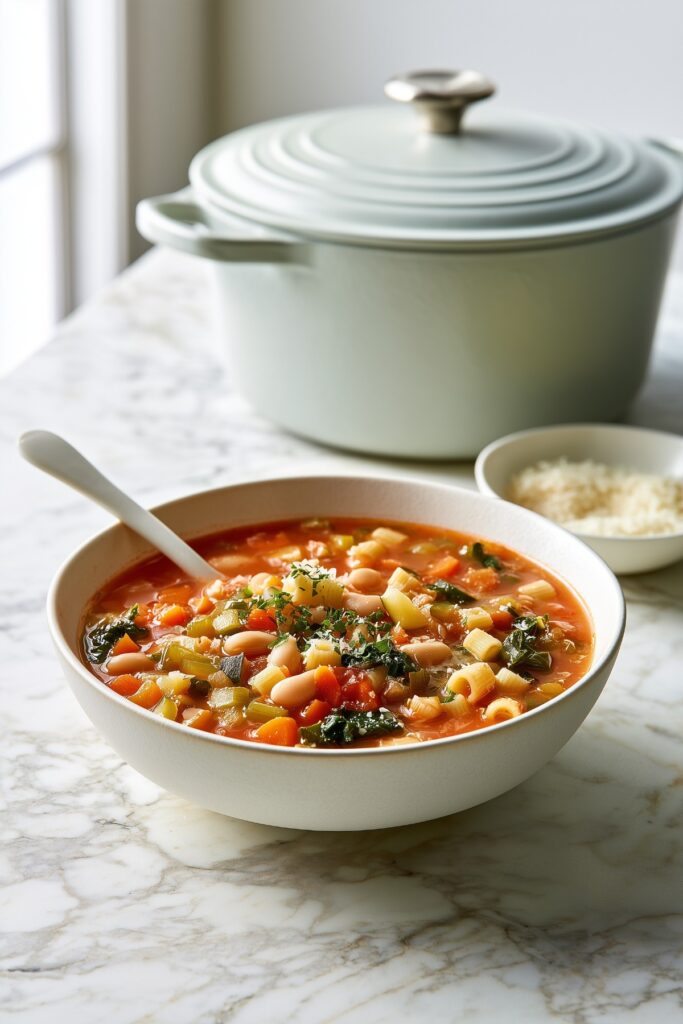
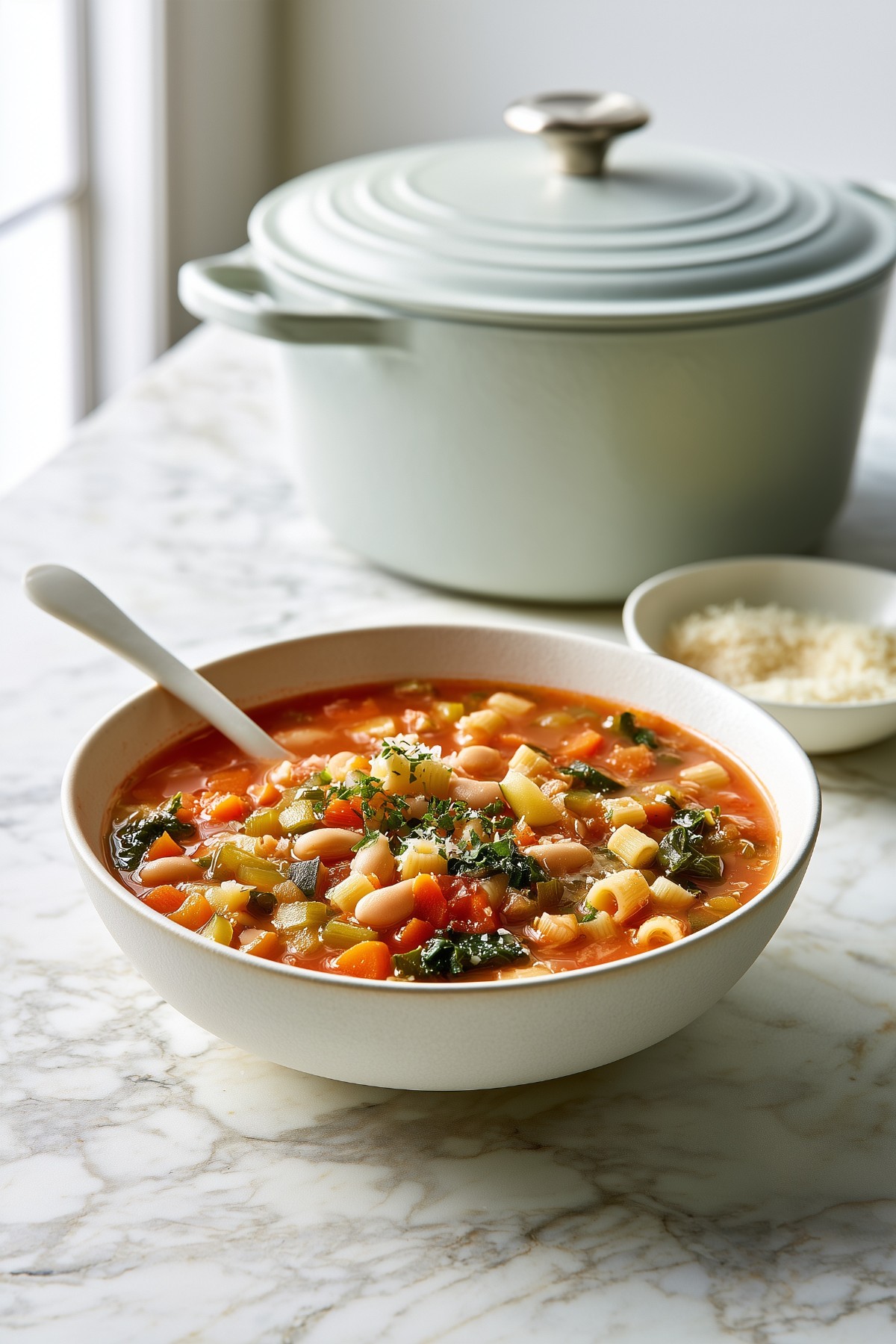
Can a bowl of vegetables and beans really keep you full until dinner? A good minestrone soup can. Carrots, zucchini, green beans and kale simmer in a tomato broth with creamy cannellini beans and a little ditalini, and the whole pot takes about an hour from chopping board to table. It makes six big bowls, it has no meat, and it reheats well.
The Order Things Go In
Minestrone is less a fixed recipe than a schedule. Every vegetable needs a different amount of time, and most disappointing pots come from adding everything at once: the zucchini turns to mush while the carrots are still hard. Follow the order below and each one ends up tender at the same moment.
| When | What goes in | Why then |
|---|---|---|
| Minute 0 | Onion, carrots, celery | Firm vegetables need about 8 minutes in oil to soften and sweeten |
| Minute 8 | Garlic, zucchini, green beans, dried herbs | A short sauté wakes up the herbs before any liquid arrives |
| Minute 11 | Tomatoes, broth, bay leaves, Parmesan rind | The broth needs about 20 minutes to taste of the vegetables |
| Minute 35 | Beans and pasta | Canned beans only need heating; small pasta needs about 10 minutes |
| Last 5 minutes | Kale, then parsley | Leafy greens wilt fast and lose their color if they cook longer |
What Makes It a Healthy Soup
The beans do most of the work here. Legumes are an inexpensive source of protein, fiber, folate and iron, and whole beans are naturally low in saturated fat, according to the Harvard T.H. Chan School of Public Health. Add five different vegetables and a modest amount of pasta, and each bowl comes in at an estimated 220 calories before any Parmesan on top.
Two small choices keep it that way. Use low-sodium broth so you control the salt yourself, and measure the olive oil rather than pouring it straight from the bottle.
Pantry and Produce
Vegetables
- 2 tablespoons extra-virgin olive oil
- 1 medium yellow onion, diced
- 2 medium carrots, diced
- 2 celery ribs, diced
- 3 garlic cloves, minced
- 1 medium zucchini, diced
- 1 cup green beans, cut into 1-inch pieces
- 2 cups chopped kale, tough stems removed (or baby spinach)
Broth and the rest
- 1 teaspoon dried oregano
- ½ teaspoon dried thyme
- 1 can (28 oz) diced tomatoes, with their juice
- 6 cups low-sodium vegetable broth
- 2 bay leaves
- 1 Parmesan rind (optional)
- 1 can (15 oz) cannellini beans, drained and rinsed
- ¾ cup ditalini or other small pasta
- 1 teaspoon kosher salt, then more to taste
- Black pepper
- ¼ cup chopped fresh parsley
- Grated Parmesan, for serving (optional)
Skip the Parmesan rind and the cheese on top and the pot is fully plant-based. The rind adds a savory depth that is hard to get any other way, so if you keep the ends of your Parmesan wedges in the freezer, this is where they belong.
One Pot, Start to Finish
1. Sweat the base
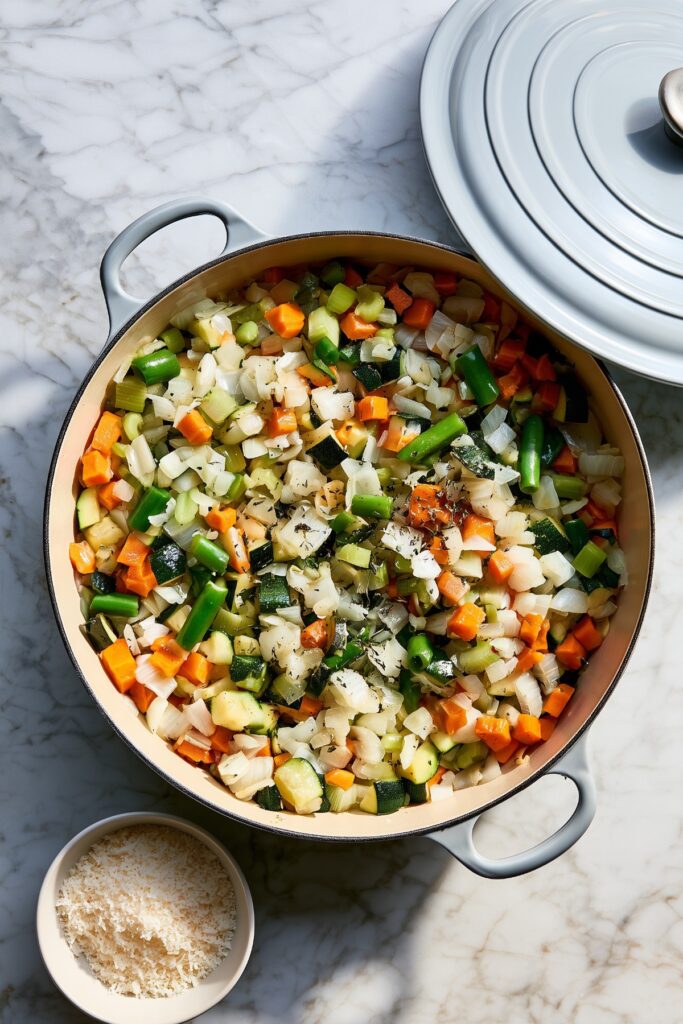
Heat the olive oil in your largest pot over medium heat, then add the diced onion, carrots and celery along with the salt. Let them soften for about 8 minutes, stirring occasionally. You are looking for onion that is soft and see-through and an aroma that has turned mellow.
2. Add the quick vegetables
Stir in the garlic, zucchini, green beans, oregano and thyme. Give it 3 minutes, just until the zucchini edges turn glossy and the green beans brighten in color.
3. Pour in the liquid
Add the tomatoes with their juice, the broth, bay leaves and Parmesan rind. Bring to a boil, then turn the heat down to a lively simmer and partially cover the pot. Cook for 20 minutes. The broth will darken slightly and taste of tomato and vegetables rather than plain stock.
4. Beans and pasta
Stir in the cannellini beans and ditalini. Simmer, uncovered, for about 10 minutes, stirring every few minutes so the pasta does not settle on the bottom. Bite a piece of pasta to check: it should be tender all the way through.
5. Wilt the kale
Add the kale for the last 5 minutes of the pasta’s cooking time, pushing it under the broth with a spoon. It is ready when it has collapsed and turned a deeper green but still has a little texture. Baby spinach needs only the last minute or two.
6. Finish and taste
Fish out the bay leaves and the rind. Stir in the parsley, then taste and add salt and pepper as needed. Serve hot, with grated Parmesan on the side for anyone who wants it.
Tasting Before You Ladle
Taste a spoonful with a bean, a piece of carrot and some broth together. The carrot should be soft but not falling apart, the beans creamy, and the broth should taste bright. If it tastes flat, it almost always needs salt; if it tastes heavy, a squeeze of lemon juice lifts it.
Look at the texture too. Minestrone should be brothy with plenty of vegetables in every spoonful. If the pasta has thickened it more than you like, add a cup of hot broth or water.
Small Moves, Better Broth
- Cut everything about the same size. Small, even pieces cook at the same rate and fit on a spoon together.
- Do not rush the first 8 minutes. Softening the onion, carrots and celery slowly is where most of the flavor comes from in a soup with no meat.
- Rinse the beans. The liquid in the can is thick and salty and clouds the broth.
- Add the greens last. Kale and spinach go dull and soft if they simmer for the full 30 minutes.
Seasonal Swaps
- Winter: replace the zucchini with diced butternut squash and add it with the onion, since it takes longer to soften.
- Different beans: chickpeas or red kidney beans work in place of cannellini. The Olive Garden-style minestrone on this site uses both kidney and cannellini beans with tomato paste and a splash of balsamic vinegar.
- Gluten-free: use a gluten-free small pasta and check it a couple of minutes early, since cooking times vary by brand.
- More protein: double the beans and skip the pasta.
If you want an even simpler pot built on beans and greens, the kale and white bean soup on this site uses just kale, white beans, onion and garlic in vegetable broth, finished with lemon juice.
Fridge, Freezer and the Pasta Problem
Soups and stews keep 3 to 4 days in the fridge and 2 to 3 months in the freezer, according to FoodSafety.gov. Pasta is the weak point: it keeps soaking up broth, so a pot made with pasta is noticeably thicker the next day.
If you are cooking for the week, leave the ditalini out of the pot. Cook it separately, keep it in its own container, and add a spoonful to each bowl when you reheat the soup. Freeze the soup without pasta as well.
Bread and a Second Pot
A thick slice of crusty Italian bread, made from just flour, yeast, salt and water and baked at 450°F, is all this soup really needs for dipping.
If you are planning a soup night, minestrone pairs well with a richer pot like the Italian wedding soup, with its tiny beef and chicken meatballs. For a second meat-free option with a different flavor, the hearty vegetarian lentil soup on this site is seasoned with cumin, turmeric and smoked paprika.
FAQ
Is minestrone soup healthy?
A homemade minestrone built on vegetables, beans and a small amount of pasta is a filling, lower-calorie meal. This version is estimated at about 220 calories per serving before cheese.
What is the difference between minestrone and vegetable soup?
Minestrone is an Italian vegetable soup that usually includes beans and small pasta or rice in a tomato-based broth. A general vegetable soup may leave out the beans and pasta.
What pasta is best for minestrone?
Small shapes such as ditalini, small shells or elbows fit on a spoon with the vegetables. Larger pasta takes over the bowl.
Can you freeze minestrone soup?
Yes, for 2 to 3 months. Freeze it without the pasta and cook fresh pasta when you reheat the soup.
Minestrone Soup
Ingredients
Method
- Heat the olive oil in a large pot over medium heat. Add the onion, carrots, celery and salt and cook for about 8 minutes, stirring occasionally, until soft.
- Stir in the garlic, zucchini, green beans, oregano and thyme and cook for 3 minutes.
- Add the tomatoes with their juice, the broth, bay leaves and Parmesan rind. Bring to a boil, then simmer partially covered for 20 minutes.
- Stir in the cannellini beans and ditalini and simmer uncovered for about 10 minutes, stirring every few minutes, until the pasta is tender.
- Add the kale for the last 5 minutes of the pasta's cooking time (baby spinach needs only the last minute or two).
- Remove the bay leaves and rind, stir in the parsley, season with salt and pepper and serve with grated Parmesan if you like.
Notes
Plant-based: skip the Parmesan rind and the cheese on top.
Swaps: butternut squash instead of zucchini (add it with the onion); chickpeas or kidney beans instead of cannellini; gluten-free small pasta.
Nutrition is an estimate (without Parmesan), not a laboratory analysis.
Leave a Reply