
Easy Thai Mango Sticky Rice
When it comes to desserts that encapsulate sweet, creamy, and refreshing flavors, Easy Thai Mango Sticky Rice stands out as a delectable delight. Imagine warm, slightly chewy sticky rice drizzled with rich coconut milk, paired elegantly with ripe, juicy mangoes. This dish is as pleasing to the eye as it is to the palate. With the creamy softness of the rice complementing the fruity burst of mango, every bite offers a dance of textures and flavors that is simply irresistible.
An interesting tidbit about this dish is that it hails from Thailand, where it’s often enjoyed as a street food staple. The simplicity of its preparation makes it a favorite among families, perfect for winter evenings or gatherings where everyone can share and enjoy. If you’re a fan of sweet rice pudding or even rice cakes, you’ll absolutely love this recipe from our blog, which brings together traditional Thai flavors and comfort food elements seamlessly.
What is Easy Thai Mango Sticky Rice?
So, what exactly is Easy Thai Mango Sticky Rice? At first glance, the name may sound a bit whimsical, right? Sticky rice is steamed to perfection, then sweetened with a touch of sugar and coconut milk. But let’s be real: isn’t it astonishing how something so seemingly straightforward could charm its way into the hearts (and stomachs) of so many? As the saying goes, “the way to a man’s heart is through his stomach,” and this delightful dish is more than equipped for the task. Why wait? Let’s dive into this delightful recipe that will leave you and your loved ones asking for seconds!
Why You’ll Love This Easy Thai Mango Sticky Rice
There are plenty of reasons why Easy Thai Mango Sticky Rice deserves a spot on your dessert table. First, the combination of soft, sticky rice enveloped in luscious coconut milk creates an unforgettable flavor sensation. It’s the star of any family gathering, leaving everyone satisfied and happy.
Second, cooking at home is not only cost-effective but allows you to tailor the flavors to your liking. Why spend money on takeout when you can whip up this luxurious dish from the comfort of your own kitchen? Plus, topping it off with roasted sesame seeds or mung beans adds that perfect extra crunch.
Finally, if you’re a fan of rice puddings or will bring to mind the comforting richness of kheer, you will fall head over heels for this Thai classic. Now is the perfect time to grab those mangoes and get cooking!
How to Make Easy Thai Mango Sticky Rice
Quick Overview
Making Easy Thai Mango Sticky Rice is not just simple; it’s satisfyingly fun! With flavors that are creamy, sweet, and fruity, each bite will take you to the streets of Thailand. In just about 30 minutes, you can whip up this incredible dish that’s perfect for impressing guests or indulging on a cozy evening at home.
Ingredients
- 2 cups sticky rice
- 1 1/2 cups coconut milk
- 3/4 cup sugar
- 1/2 teaspoon salt
- 2 ripe mangoes
- Sesame seeds or mung beans for garnish
Step-by-Step Instructions
- Soak the Sticky Rice: Begin by soaking the sticky rice in cold water for at least 4 hours or overnight. This step is crucial for achieving the perfect texture.
- Steam the Rice: Once soaked, drain the rice and steam it in a bamboo or metal steamer lined with cheesecloth for about 20-25 minutes until tender and translucent. You can also use a rice cooker if you prefer!
- Prepare the Coconut Mixture: While the rice is steaming, combine the coconut milk, sugar, and salt in a saucepan over medium heat. Stir until the sugar dissolves, but do not bring it to a boil.
- Combine Rice and Coconut Milk: After the rice is cooked, transfer it to a mixing bowl and pour in about 1 cup of the sweet coconut mixture. Stir gently until the rice absorbs the flavors. Let it sit for about 15 minutes.
- Slice the Mangoes: While the rice absorbs the coconut milk, peel and slice the ripe mangoes into thin strips.
- Serve: To plate your dish, place a serving of sticky rice on a plate, drizzle with the remaining coconut sauce, and top with fresh mango slices. Garnish with sesame seeds or mung beans if desired.
- Enjoy: Serve warm or at room temperature.
Top Tips for Perfecting Easy Thai Mango Sticky Rice
- Sticky Rice Alternatives: Should you be without sticky rice, consider using short-grain rice as an alternative, though the texture will differ slightly.
- Serving Suggestions: If you want to elevate the dish further, consider adding a sprinkle of toasted coconut on top for a delightful twist.
- Watch Your Timing: Make sure to keep an eye on the rice during steaming; over-steaming can lead to mushy results. Aim for a tender yet firm texture.
Storing and Reheating Tips
To store your Easy Thai Mango Sticky Rice, place it in an airtight container in the refrigerator for up to 3 days. If you want to enjoy it later, you can freeze it for up to a month.
When reheating, use a steaming method to maintain the texture. Alternatively, microwave it with a splash of coconut milk to avoid drying it out. Enjoy the delightful blend of flavors and textures that make this dish a true fan favorite!
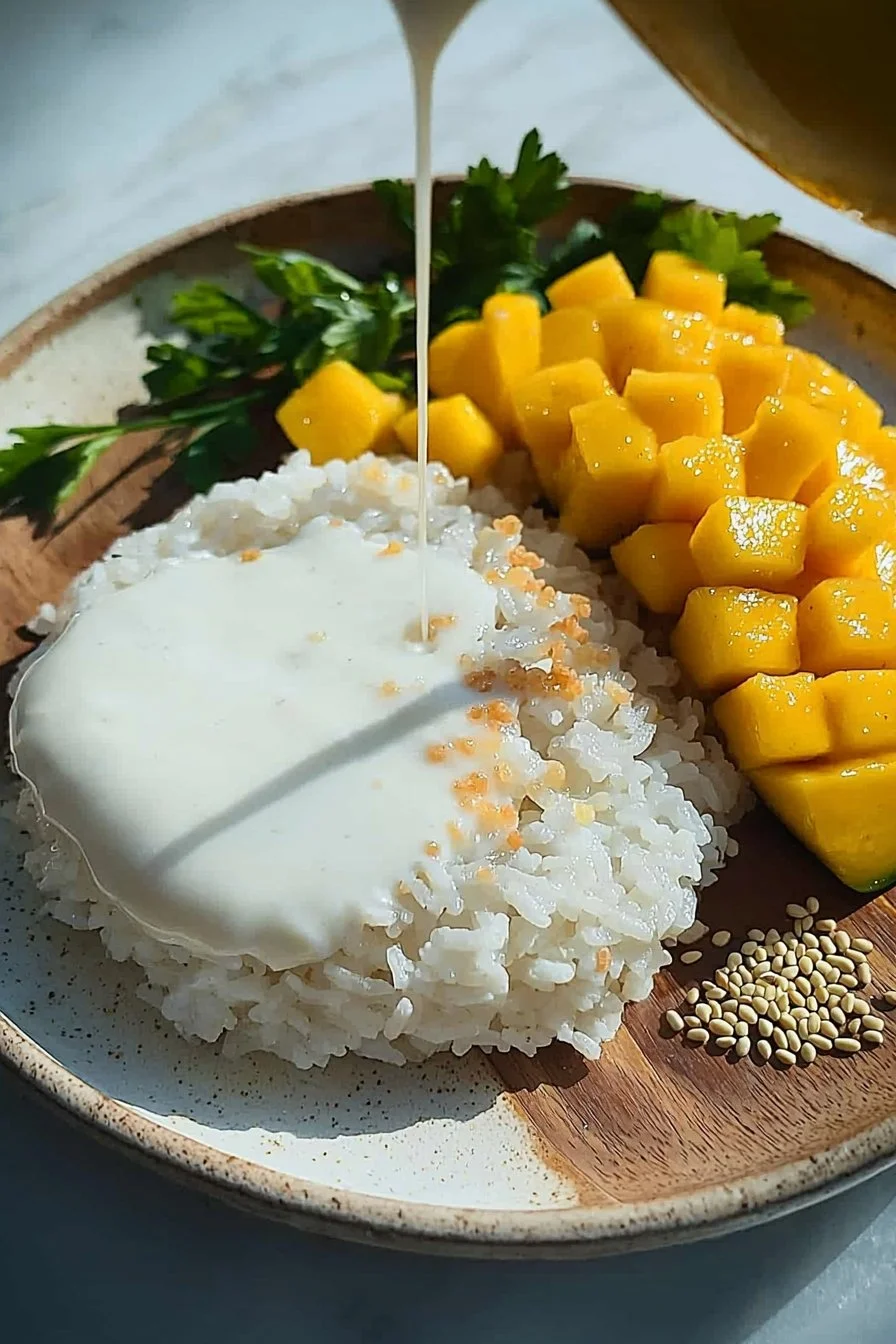
Overall, Easy Thai Mango Sticky Rice is the ultimate blend of taste and enjoyment, perfect for family gatherings or a simple dessert treat. So why not try your hand at this easy recipe today? Your taste buds will thank you!
Easy Thai Mango Sticky Rice
Ingredients
Method
- Soak the sticky rice in cold water for at least 4 hours or overnight.
- Once soaked, drain the rice and steam it in a bamboo or metal steamer lined with cheesecloth for about 20-25 minutes until tender and translucent.
- While the rice is steaming, combine the coconut milk, sugar, and salt in a saucepan over medium heat. Stir until sugar dissolves but do not boil.
- After the rice is cooked, transfer it to a mixing bowl and pour in about 1 cup of the sweet coconut mixture. Stir gently until the rice absorbs the flavors. Let it sit for about 15 minutes.
- Peel and slice the ripe mangoes into thin strips.
- To plate, place a serving of sticky rice on a plate, drizzle with the remaining coconut sauce, and top with fresh mango slices. Garnish with sesame seeds or mung beans if desired.
- Serve warm or at room temperature.
Leave a Reply