Ingredients
Equipment
Method
- Put the chicken in a large pot with the onion, carrots, celery, thyme, pepper and salt. Pour in enough broth or water to cover the bird by an inch. Bring to a bare simmer, never a rolling boil, and cook uncovered for 50 to 60 minutes.
- Check the thickest part of the thigh with an instant-read thermometer, away from the bone. It must reach 165F (74C). Lift the chicken onto a plate and let it cool until you can handle it.
- Strain the broth if you want it clear, or leave the vegetables in. Whisk the 3 tbsp flour into 1/3 cup cold broth until smooth, stir it back into the pot and simmer 3 to 4 minutes, until the broth coats a spoon.
- Whisk the flour, baking powder and salt in a bowl. Rub or cut in the cold butter until the mixture looks like coarse crumbs. Pour in the cold milk and stir just until no dry flour is left. The dough stays lumpy; stop there.
- Drop heaped tablespoons of dough onto the barely simmering broth, spaced apart, until the surface is covered in one layer. Cover the pot and cook 15 minutes without lifting the lid.
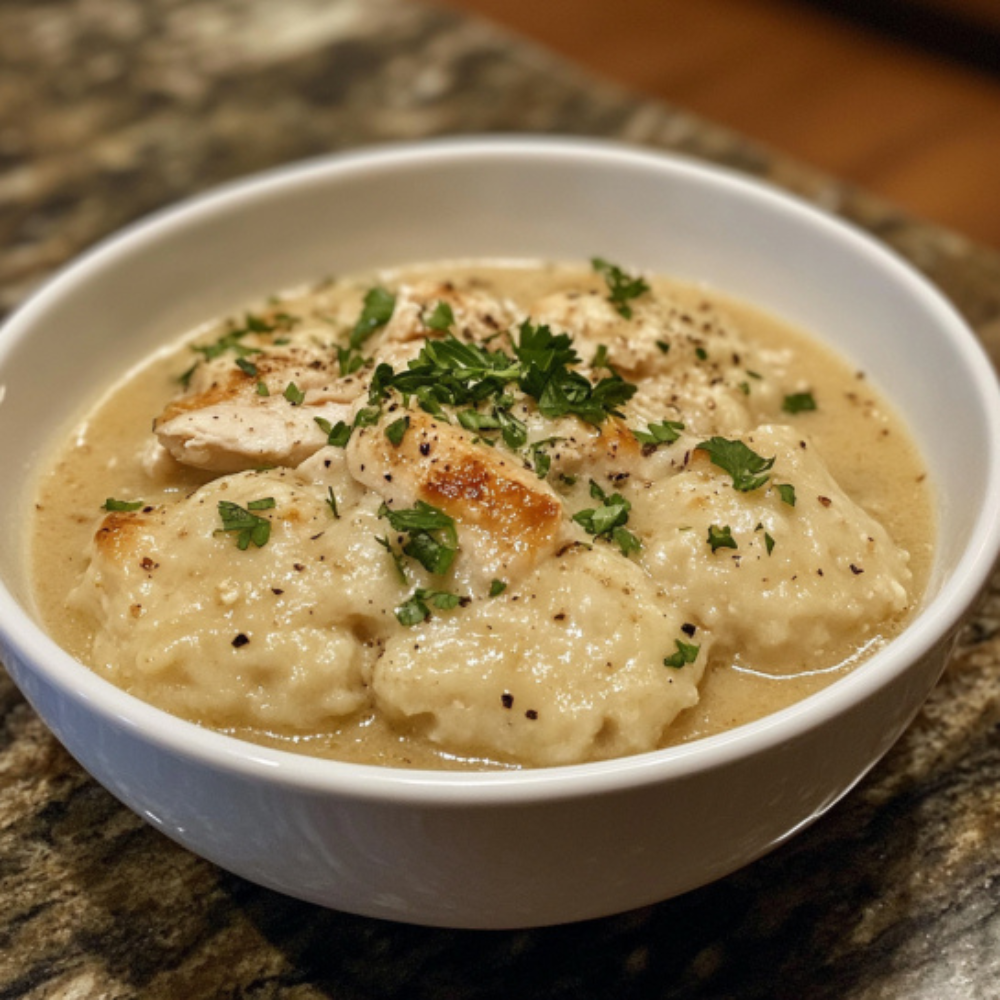
- Pull the meat off the bones in large shreds, discarding skin and bones. Lift the lid, slide the chicken in around the dumplings and warm through for 5 minutes. Taste, add salt and pepper, scatter the parsley and serve.
Notes
Storage. Refrigerate in an airtight container for up to 3 days; USDA guidance allows 3 to 4 days for cooked poultry leftovers. The dumplings soak up broth overnight, so loosen with a splash of stock when reheating over low heat.
Freezing. Freeze the chicken and broth without the dumplings for up to 3 months, then make a fresh batch of dough on the day. Frozen dumplings turn pasty.
Make ahead. Poach the chicken and build the broth a day ahead. Mix the dough only when the broth is simmering, because baking powder starts working as soon as it meets the milk.
Substitutions. Bone-in thighs replace the whole bird and need only 35 to 40 minutes. Buttermilk replaces the milk for a tangier dumpling. Shortening replaces butter for a softer crumb.
Nutrition is an estimate, not a laboratory analysis.