Published:
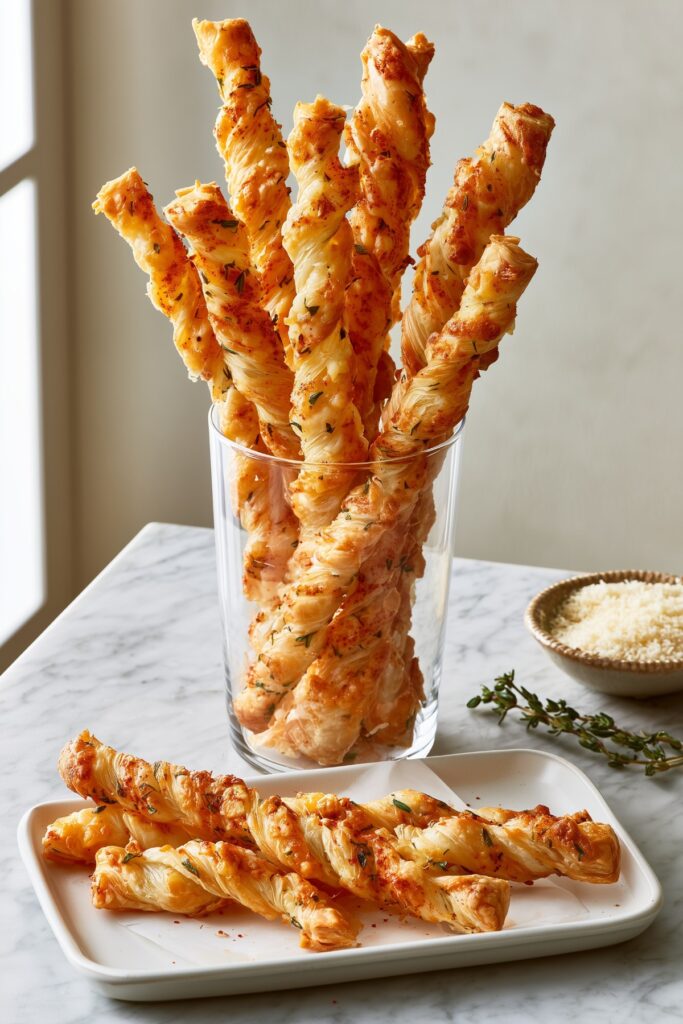
Twist, bake, done. Two sheets of store-bought puff pastry, a cup and a half of grated cheese and less than an hour of your evening become 24 golden, crackly cheese straws, the kind of New Year’s Eve food that vanishes from the glass long before anyone starts counting down.
Most Batches Go Wrong at the Twist
Cheese straws look like the easiest thing on the party table, and they are, right up to the moment you pick up a strip and turn it. That is when the cheese slides off, the layers tear, and the strip stretches into a thin ribbon that bakes flat.
Puff pastry rises because the butter between its layers turns to steam in the oven, so the dough has to stay cool while you handle it (King Arthur Baking explains the layering). Warm, stretched dough loses that lift before it ever reaches the heat.
Three small habits fix almost every problem:
- Press the cheese in. After sprinkling, roll over the sheet once with the rolling pin so the cheese sticks to the egg wash instead of sitting on top.
- Cut straight down. A pizza wheel or a sharp knife pushed straight through keeps the layers separate. Sawing back and forth squashes them together at the edges.
- Twist, don’t pull. Hold both ends and turn them in opposite directions, three or four turns, without stretching the strip longer.
The Short Shopping List
- 1 package (17.3 oz) frozen puff pastry, 2 sheets, thawed overnight in the fridge
- 1 large egg beaten with 1 tablespoon water
- 1 cup finely grated sharp white cheddar or Gruyère (about 3 oz)
- ½ cup finely grated Parmesan (about 1½ oz)
- 1 teaspoon fresh thyme leaves, chopped (or ½ teaspoon dried)
- ½ teaspoon smoked paprika
- ½ teaspoon kosher salt
- Black pepper, to taste
- A little flour for rolling
Use the small holes of a box grater or a rasp for both cheeses. Thick shreds sit on top of the egg wash instead of sinking into it, and they tend to fall off when you twist.
The cheese is the one place where the choice really changes the result:
| Cheese | What you get | Best paired with |
|---|---|---|
| Parmesan | Salty, nutty and very crisp; browns fast | A softer melting cheese, so the straws are not too dry |
| Sharp white cheddar | Tangy, melts into the folds, keeps a slight chew | Parmesan and smoked paprika |
| Gruyère | Rich and mellow, melts smoothly into the twists | Parmesan and thyme |
From Sheet to Straw
1. Oven on, trays lined
Set a rack in the middle of the oven and heat it to 375°F (190°C). Line two baking sheets with parchment. Mix the cheeses, thyme, paprika, salt and pepper in a bowl so every strip gets the same seasoning.
2. Roll the first sheet
Lightly flour the counter and roll one cold pastry sheet into a rectangle of about 10 by 12 inches. It only needs to grow a little; you are evening out the fold lines, not thinning the dough. Leave the second sheet in the fridge.
3. Brush, sprinkle, press
Brush the whole sheet with a thin coat of egg wash, right to the edges. Scatter half of the cheese mixture over it and roll the pin over the top once, firmly. When you tilt the sheet, nothing should slide.
4. Cut 12 strips
With a floured pizza wheel, cut the sheet crosswise into 12 strips about ¾ inch wide and 10 inches long. Go in one clean stroke per cut.
5. Twist and space them out
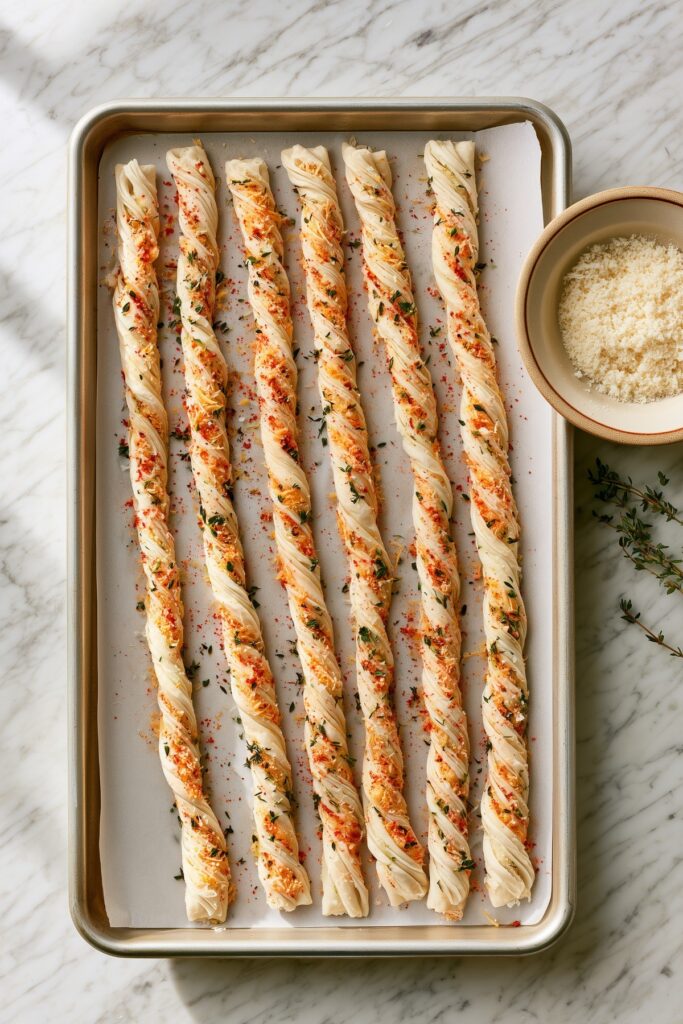
Pick up a strip by both ends, twist in opposite directions until you have a tight spiral, and lay it on the tray. Press the ends onto the parchment so the twist does not unwind in the oven. Leave about an inch between straws so steam can escape and the twists brown on all sides; if one sheet of strips does not fit on a single tray, spread the rest onto the second one. If the dough has gone soft and sticky by now, slide the tray into the fridge for 10 minutes before baking.
6. Bake one tray at a time
Bake for 14 to 16 minutes. Around the 10-minute mark the straws puff and the cheese bubbles; keep going until the ridges are a deep gold and the cheese at the tips has turned a toasty brown rather than pale yellow. While the first tray bakes, repeat steps 2 to 5 with the second sheet.
7. Cool on the tray
Leave the straws on the parchment for 5 minutes. They crisp as they cool, and moving them hot can snap them.
Reading the Color
Underbaked straws are the most common letdown: they look golden on top but stay soft and doughy in the middle of each twist. Break one open. You should see dry, separated layers all the way through, with no damp white streak in the center.
Overbaking shows up in the cheese first. Dark brown spots on the cheese are fine; black edges and a bitter smell mean the tray needed to come out a minute or two earlier, so check from 13 minutes onward on your first batch.
Tips That Actually Change the Result
- Thaw in the fridge, not on the counter. Overnight in the fridge keeps the butter firm and the sheets easy to roll without cracking.
- Egg wash right to the edges. Bare corners have nothing to hold the cheese, and those are the ends you twist first.
- Bake on the middle rack. Too close to the bottom element and the cheese on the underside scorches before the twists cook through.
- Grate, don’t shred. Fine cheese clings to the dough; coarse shreds drop onto the tray and burn.
Serving Them at Midnight
Stand the cooled straws upright in a couple of tall glasses or jars and they look like a bundle of sparklers on the table, which suits a New Year’s Eve spread and saves platter space. Their salty crunch also balances something sweet and creamy, such as a tray of cranberry brie bites, where a piece of brie and a spoonful of cranberry sauce bake inside folded puff pastry pockets.
Plan the rest of the spread around the clock. For dips and anything with a meat or dairy filling, the FDA’s buffet guidance is to throw out perishable food that has sat at room temperature for more than 2 hours, so put those out in smaller batches.
Flavor Swaps
- Everything bagel: replace the paprika and thyme with 1 tablespoon everything bagel seasoning.
- Rosemary and black pepper: swap the thyme for finely chopped fresh rosemary and double the pepper.
- Pesto ribbons: spread a thin layer of basil pesto under the Parmesan before twisting.
If you would rather go fully sweet, the cinnamon twists on this site use the same store-bought puff pastry with cinnamon sugar and melted butter.
Making Them Ahead
The twists can be shaped hours before the party and kept covered on the trays in the fridge, then baked straight from cold. Baked straws are at their crispest on the day they come out of the oven; if you bake them earlier, keep them in an airtight container and eat them within 2 days, warming them for a few minutes in a 350°F oven to bring the crunch back.
More for the New Year’s Eve Table
For something heartier next to the straws, mini beef Wellingtons wrap a ground beef and mushroom filling in squares of puff pastry.
If you want one more vegetarian option, spinach artichoke swirls roll a creamy spinach, artichoke and cream cheese filling into a puff pastry log that is sliced into pinwheels before baking.
FAQ
Can I make cheese straws ahead of time?
Yes. Twist them and keep them covered in the fridge on the lined trays, then bake shortly before guests arrive. Baked straws keep in an airtight container but are crispest on the day they are made.
Why are my cheese straws soggy?
They were usually pulled too early or baked too close together. Bake until the ridges are deep golden and the center of a broken twist looks dry, and leave a little space between straws so steam can escape.
What is the best cheese for cheese straws?
A mix works best: Parmesan for crunch and salt, plus a melting cheese such as sharp cheddar or Gruyère for flavor. Grate both finely so they stick to the pastry.
Do you flip cheese straws when baking?
It is not required. Some recipes turn the straws over for the last couple of minutes to brown the underside; baking on the middle rack on parchment gives an evenly golden bottom without flipping.
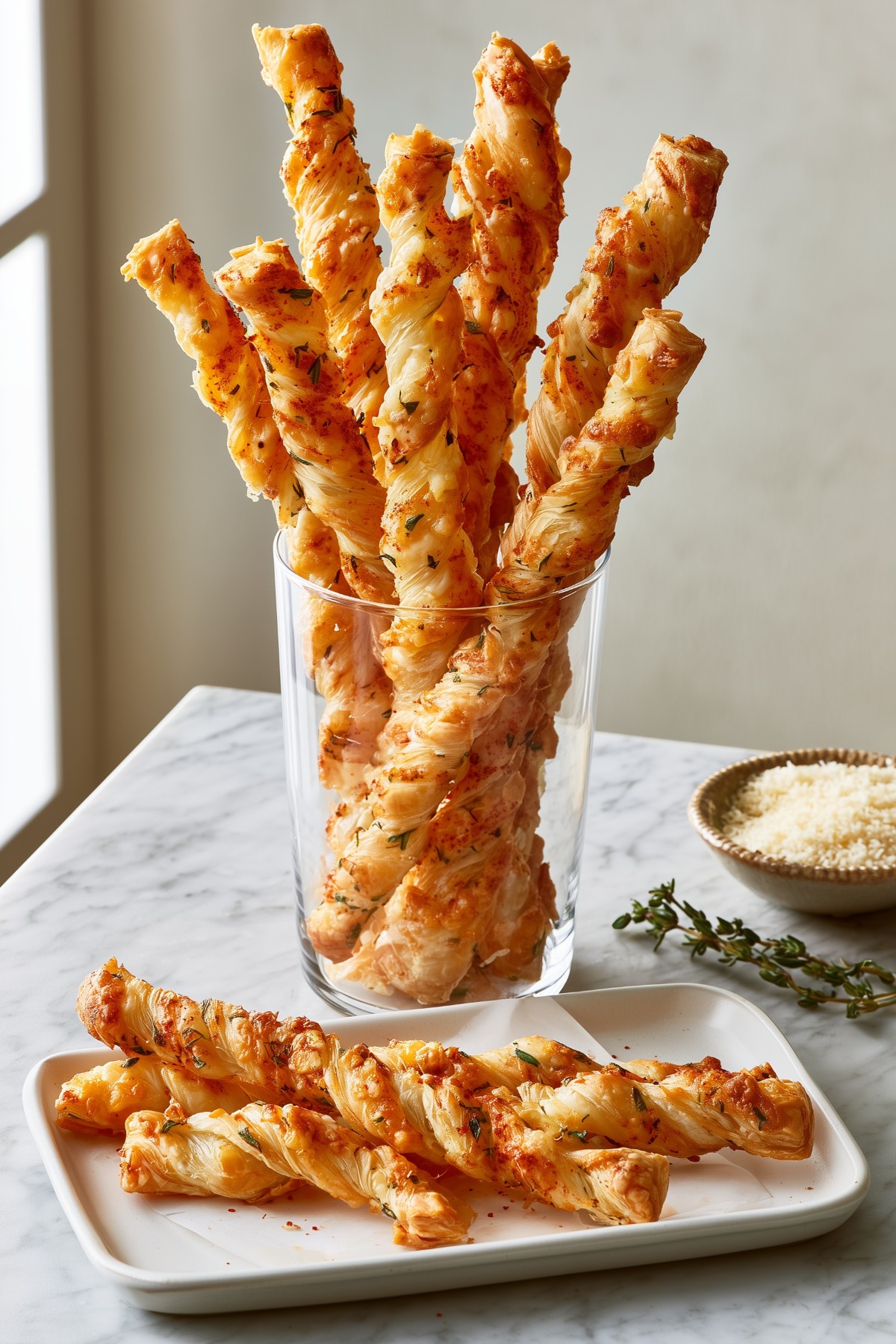
Puff Pastry Cheese Straws
Ingredients
Method
- Set a rack in the middle of the oven and heat it to 375°F (190°C). Line two baking sheets with parchment. Mix the cheeses, thyme, paprika, salt and pepper in a bowl.
- On a lightly floured counter, roll one cold pastry sheet to about 10 x 12 inches. Keep the second sheet in the fridge.
- Brush the sheet with egg wash right to the edges, scatter half of the cheese mixture over it and press it in with one firm pass of the rolling pin.
- Cut the sheet crosswise into 12 strips about 3/4 inch wide, using one clean stroke per cut.
- Twist each strip by turning the ends in opposite directions, lay it on the tray and press the ends onto the parchment. Chill the tray for 10 minutes if the dough has gone soft.
- Bake one tray at a time for 14 to 16 minutes, until the ridges are deep golden and the cheese at the tips is toasty brown. Repeat with the second sheet while the first tray bakes.
- Cool the straws on the tray for 5 minutes before moving them.
Notes
Storage: crispest on the day they are baked; keep leftovers in an airtight container and eat within 2 days, warming them a few minutes at 350°F to re-crisp.
Swaps: Gruyère for cheddar, rosemary for thyme, everything bagel seasoning for the paprika and thyme.
Nutrition is an estimate, not a laboratory analysis.
Leave a Reply